December 2025
Historically gender has represented a key factor of inequalities in accessing conflict zones. It continues to generate disparities in the contemporary photo news field especially where it intersects with ethnicity. Nevertheless, women photographers play a significant role in visualizing conflict in the media; they reframe classical understandings of conflict, resist governmental manipulations, and readdress conflict ethics. But precisely how the intertwining of gender and race shapes the aesthetic and ethics of conflict photography remains an unexplored question. By triangulating autoethnography, semi-structured interviews, and on-line sources, I have investigated how conflict women and men photographers’ experiences of gender and race influence the formation of photographic gazes of war. I have dissected 139 photographs of the Yemen war (from 2015 to 2022), taken by 16 international women and men photographers, and 7 photographs of my conflict photography documentary about the Julian-Dalmatian conflict (1943-1958). To do so, I have developed and employed an intersectional framework which I call “the mirror gaze” and which connects women and men photographers’ diverse life and work conditions to the formation and characteristics of their photographic gazes on war.
The mirror gaze
The mirror gaze (figure 1) works dynamically as a mirror between the photographers’ socio-professional conditions (including the ways they react to these) and the formation of their mediated views on war. It individuates four main elements of the photographers’ gaze: the focus, the tone (accent or mood), the spatial and temporal dimension, and the ideology. The focus represents the actor and/or territory at the centre of the conflict gaze. Women photographers’ invisibility and/or marginalization in patriarchal and gendered societies and in the field of photography tend to move their focus towards war actors who are invisible in and/or marginalized by mainstream media narratives. By contrast, their men colleagues’ visibility and/or centrality in highly patriarchal societies and photo news fields tend to redirect their photographic attention towards issues or subjects already visible in and central to mainstream representations.
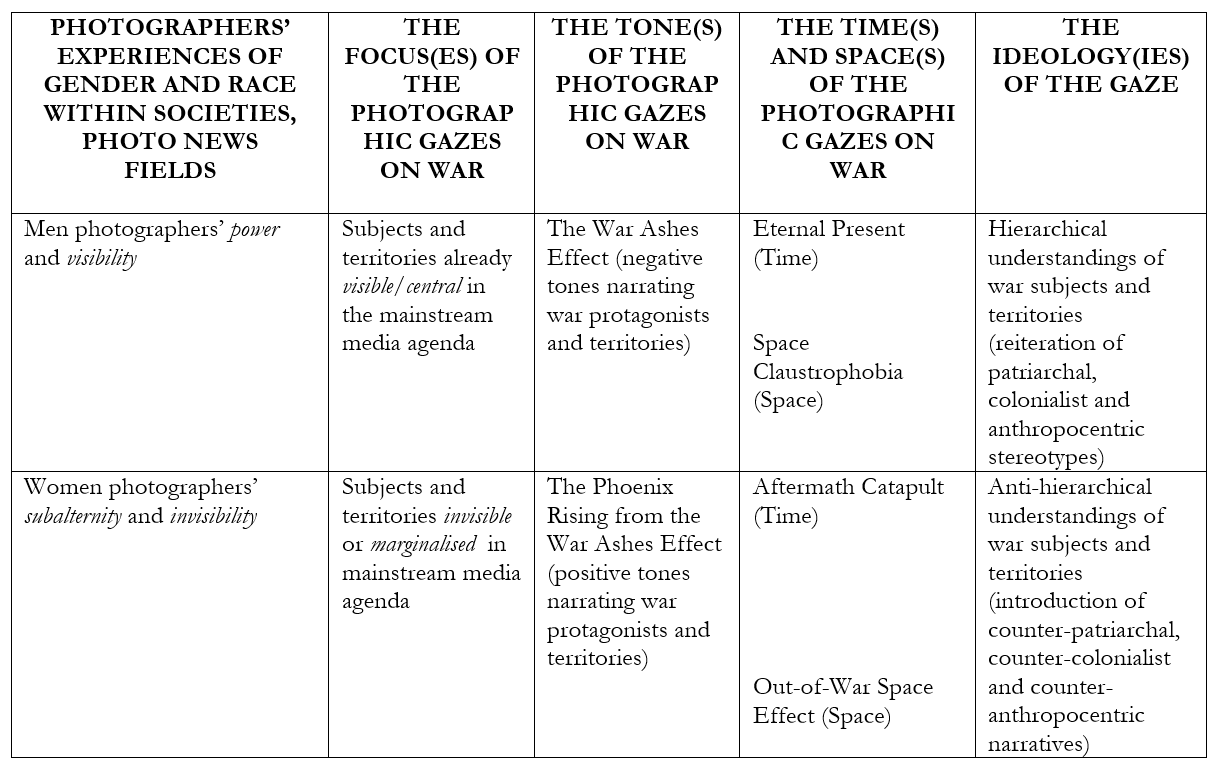
Figure 1. This framework shows how conditions of power, experienced differently by men and women photographers, impact on the formation of their photographic gazes on conflict actors and territories, influencing diverse focuses, tones, temporal and spatial dimensions, and ideologies (© Angela Varricchio).
The tone of photography embodies the emotion which the photographic narrative oozes. Due to their resilience to several intersecting societal and work struggles, women photographers are inclined to use mainly positive tones, which I would like to call the “phoenix-rising-from-the-war-ashes” effect. It narrates war subjects with a resilient ability to survive the physical and psychological impact of the conflict through actions aimed at reconstructing their lives. It also frames war places as unaffected, or little affected by disasters. On the contrary, men photographers’ acceptation and/or compliance with their privileges in men-centric societies and photo news industries is mirrored by use of mainly negative tones—what I call the “war-ashes” effect. These tones construct conflict protagonists as physically or emotionally impacted by disasters and passive subjects at the mercy of wartime destruction and death.
The spatial and temporal dimensions of photography are influenced by embodied structural conditions. Women photographers’ resistance to continuous exclusion, marginalization, and rejection lead to what I wish to term the “aftermath-catapult” effect and the “out-of-war-space” effect. This effect hurls conflict protagonists towards a future of post-conflict, reconstructing life among the debris of conflict-induced catastrophes. Their resilience spatially shapes the “out-of-war-space” effect in which conflict territories are freed from dangerous threats, projecting conflict protagonists and spaces towards a safe dimension of warless routine. By contrast, men photographers’ privileges and compliance with power tend to reiterate negative tropes via two effects I would like to conceptualize as “eternal-present” and “space-claustrophobia.” The “eternal-present” embodies photographic codes that cage conflict actors and places in the continuous anxiety of future catastrophic events, a loss of hope to survive, have back a life routine, or plan a fulfilling future. Similarly, the “space-claustrophobia” effect creates a sense of claustrophobia and solitude, confining war protagonists and territories to the lethal spiral of war -related devastations (death, pain, hunger, pollution, etc.), without the possibility to spatially escape or move.
Women’s and men’s position within power relations and the ways they react to these also shape their photographic ideologies of the gaze, reinforcing or dismantling hegemonic or counter-hegemonic ethics with which to view conflict actors and spaces. Here I focus on three ideologies photographically narrated in the context of wars: patriarchy, anthropocentricism, and colonialisms. Women photographers’ resilient opposition to men-centric societies and photo news fields tend to construct counter-patriarchal, counter-colonialist, and counter-anthropocentric ideologies of conflict protagonists and spaces, marginalized by mainstream media. By contrast, men photographers’ positions of power at the vertex of society and the photo news industry tend to reinforce patriarchal, colonialist and anthropocentric stereotypes circulated by mainstream media.
My own mirror gaze
As a young woman photojournalist, I experienced several obstacles in the Italian photography and photo news field between 2005 and 2013. Sexist prejudices, sexual harassments, and mansplaining were constant companions. As I detail in the following diary entry from February 2004, the allegation of photo manipulation was the worst humiliation I could experience as a young photojournalist.
After my post-degree specialization in Photojournalism, I decided to work for a southern-Italian newspaper. The editor-in-chief of the newspaper, a middle-aged man without any education in visual culture and whose daily job was out of journalism, called me one day, asking for an appointment. The day of our meeting, I found him observing the newspaper front page with my published (and unpaid) photograph. ‘Angela, why did you manipulate the photograph we published?’. None of my men colleagues was asked the same question. ‘Manipulation?’ I asked astonished. ‘I do not manipulate my photographs,’ I replied annoyed. ‘You manipulated the photo by a software! There is a dark vignette around the subject!’ he insisted. ‘It is not photomanipulation, it is a photo-editing technique used before the introduction of photo-editing software. Photographers used to it darkroom […]. The image has been worked digitally, but it is not manipulated!’. ‘It has been manipulated!’ he insisted. The next day, I knocked his door with a book on the history of photography under my arm. I showed him Edith Claire Gérin’s black and white Le Passant du Pont des Arts (1949), worked aesthetically like my photograph. ‘Take a look at the year. Photo-editing software did not exist at that time!’. He took a careful look at Gérin’s photograph. ‘Sorry Angela, I did not know of this photograph,’ he said submissively.
Being a southern Italian photojournalist in a highly male-dominant and north-centred photojournalistic field seemed sufficient grounds for professional exclusion. Despite my best efforts to find a job as a photographer or photojournalist, I found nothing north of Rome. It was not misfortune. At 27 years old, I had an Honours Degree in Communication Science, two post-degree specializations (in Photojournalism and Media Content Product Management), had attended several courses of photographic techniques and language, had obtained two years of experience at two studios and six months of experiences as a photojournalist, and had won 10 national photographic awards. For years, I had been sending my curriculum to northern Italian newspapers, photo agencies, studios, and schools of photography—all to no avail.
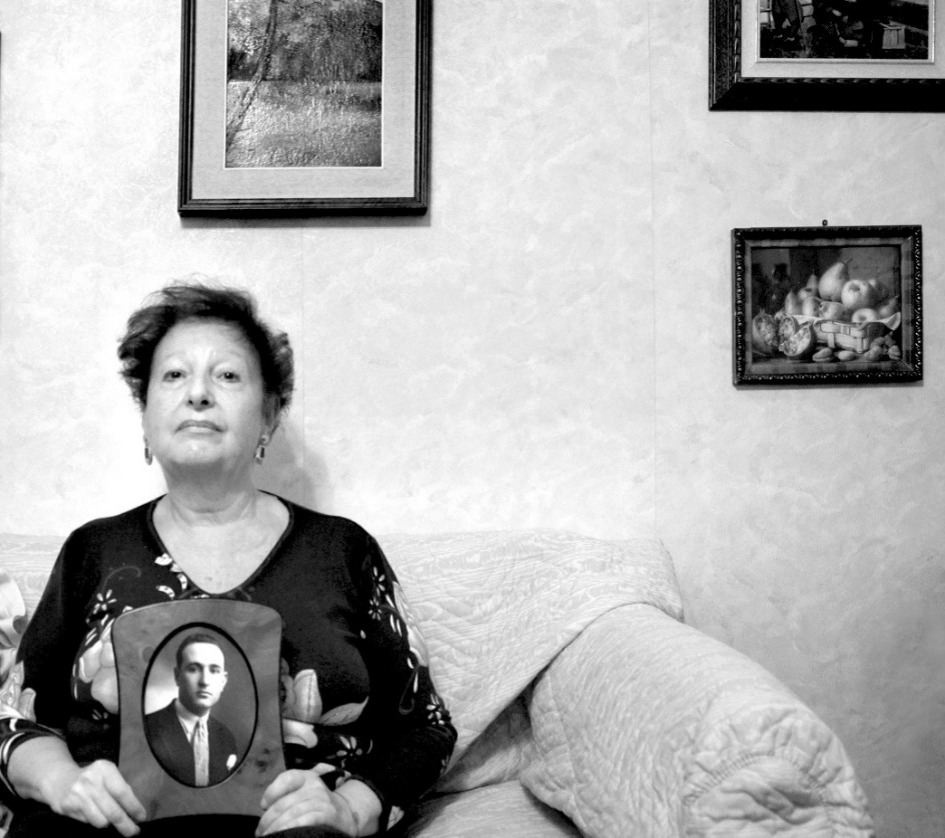
I understood later that gendered and racialized inequalities that I survived mirrored my understanding of the Julian-Dalmatian question. As a marginalized photojournalist, my attention was redirected towards a marginalized northern-eastern Italian ethnic minority, the Julian-Dalmatians. I produced The Julian-Dalmatian Question. A Denied Truth (2007–2008). Between 1943 (the year fascism fell in Italy) and 1958, the Julian-Dalmatians were tortured, slaughtered, and persecuted by the Yugoslavian dictator Tito’s Slav partisans for a complexity of political and ethnic reasons. When I started my photographic documentary in 2007, this feature was marginal in the Italian media. Moreover, the scarcely available photographic narrative about it was incomplete and fragmented. In fact, the Julian-Dalmatian question was exclusively narrated as infoibamento, consisting of throwing one or more persons, often with hands and feet tied, into a foiba (a vertical natural chasm) after shooting them. To address this incompleteness, I started my documentary with the aim of reconstructing the photographic agenda of the Julian-Dalmatian tragedy, adding the internment in communist working camps and the exodus. Furthermore, I aimed at giving space to women protagonists of the genocide, quasi-absent in the visual narrative of the Julian-Dalmatian events. In fact, apart from the portrait of Norma Cossetto (a girl who was tortured and raped by communist partisans), all the visual materials I found represented men soldiers, prisoners or survivors. It resonates with the tradition of conflict imagery which has always been a very male-dominant domain. In its rare portrayals of women, war imagery visually constructs them as passive subjects. I wanted to change this narrative. Amongst the several Julian-Dalmatian women I portraited to make them visible, there was Antonietta Molea (figure 2). Antonietta, a polite and sweet middle-aged woman, was the daughter of Domenico Molea, one of the several Julian-Dalmatian infoibati. When we met, Antonietta showed me the portrait of her father. In that moment, her pain for his sacrifice resurfaced in a dignified and composed way. While she explained to me how docile he was, she caressed the portrait of Domenico, carefully preserved in an elegant wooden frame. The photograph was not covered in dust, hidden in a drawer, or in a forgotten pile of papers. It was kept clean and displayed on a table. It meant that in Antonietta’s life, memory, and heart, Domenico was still alive. For the shoot, she wore a shirt with a floral pattern. I never ask the subjects of my photographs to wear specific garments or makeup. I want them to express their personalities so that their intentions, ideas, will, and emotions may become visible. For the portrait I took of Antonietta, I only asked her to sit on her sofa on which we had the conversation and to pose with her father Domenico’s portrait. I framed her horizontally to connect her figure and facial expression to objects in her living room in which I recognized several meanings. For example, the heart-shaped cushion on the sofa expressed her resistance to the loss of her beloved father and their living bond.
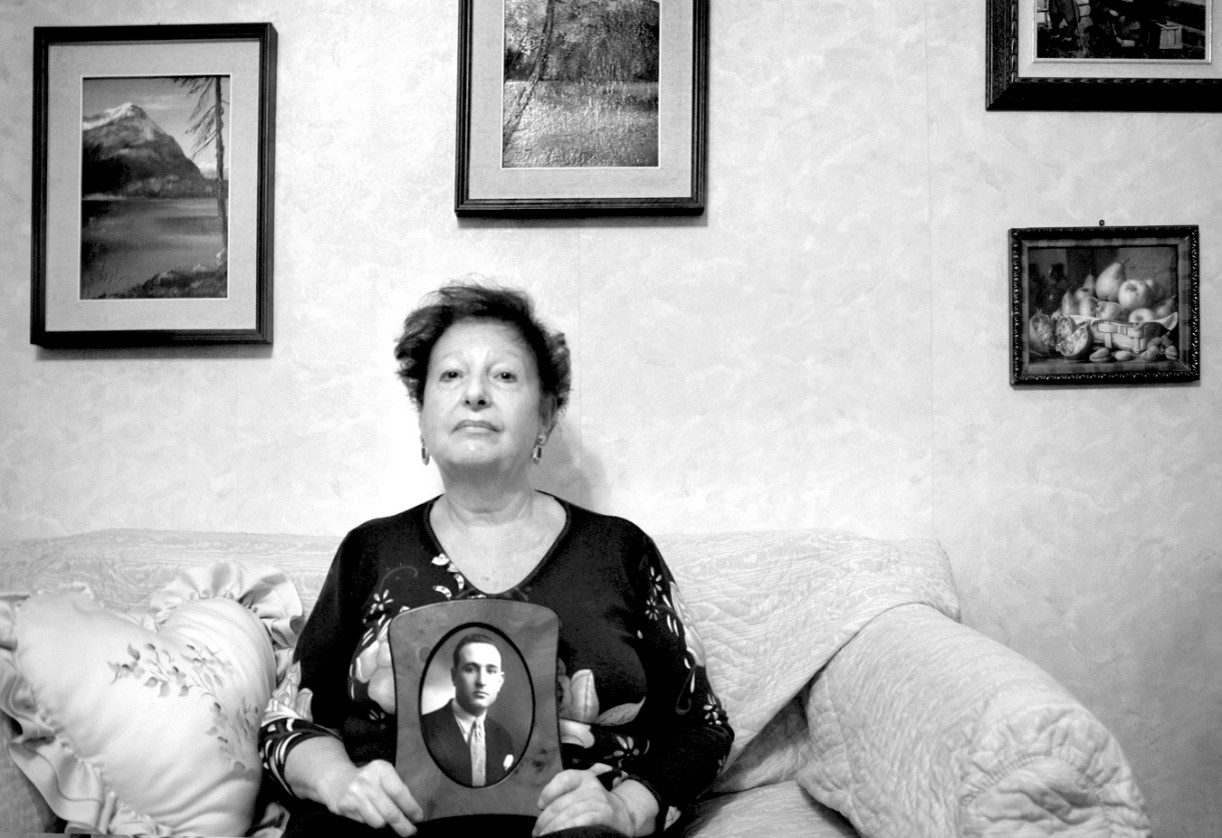
Figure 2. Antonietta Molea with a framed portrait of her infoibato father, Domenico in Trieste, Italy (Angela Varricchio, 2007, from the archive of “The Julian-Dalmatian Question: A Denied Truth,” 2007-2008).
Antonietta wore light makeup and golden earrings to emphasise the elegance of her clothes. Her hair was styled elegantly. The fact that her shirt had flowers coming out of a dark background signified love of life. To me, these were conscious arrangements that demonstrated her firm will to be a dignified and resilient witness to the violence of infoibamento. Furthermore, the paintings hanged on the wall of her living room spoke to her love for beauty and the emotional pleasure she took in contemplating landscapes and the natura morta seen on the extreme right of the image. All these elements told a story of personal resurrection: Antonietta collected the pieces of an intimate and personal tragedy and transformed them into pride, demonstrating that although war kills bodies it does not slaughter the spirit of survivors and their will to remember. Avoiding autoreferential self-victimization, Antonietta reacted with courage and strength to pain and desperation. My resistance to several obstacles in the Italian men- and north-centric photojournalism field literally shaped the “phoenix-rising-from-the-war-ashes” effect because my portrayal of Antonietta was a re-action of sorts to pain. I also used digital photo editing techniques to strengthen this effect. I highlighted the expression of Antonietta, the portrait of her father Domenico, the paintings, and the cushion so that the eye of the observer could jump over and perceptually connect all these elements.
Moreover, when I set up the photo shoot in Antonietta’s living room, I wanted to shift the spatial and temporal tropes about conflict actors circulated stereotypically (even though scarcely) by Italian mainstream media. War does not stop when the blood of innocents congeals and the fumes of bayonets across battlefields dissipate. It oversteps the confines of its entrenchments by living in the memory of survivors. Through the memorabilia of survivors’ domestic contexts, I wanted conflict to spatially abandon the desperation of the deadly destiny of the murdered and to become a composed pain of living witnesses. I wanted to suffocate the non-sense of human bestiality to create a photographic remembrance of historical facts and active admonition for future generations. I wanted to shape a hopeful projection towards the future: an idea of conflict’s aftermath, of life reconstruction and peace in which ethnic and political diversity is richness, not grounds for slaughter. I wanted to expand the conflict geographically and temporally by catapulting the viewer towards the possibility of resurging from the scars of conflict into a proud witness of injustice.
I purposely portrayed Antonietta and other Julian-Dalmatian women protagonists to contrast the patriarchal exclusion of women in the Italian photographic narrative of the Julian-Dalmatian question. I framed Antonietta at half-length and almost at the centre of the photograph to metaphorically recentre the existence of Julian-Dalmatian women. I wanted to make her visible. I wanted her to exist photographically and thus historically. I also aimed at breaking the patriarchal tradition’s photographic narratives of women survivors of war. Although in the late 1990s did the President of the Italian Republic Giorgio Napolitano established 10 February as a “Day of Memory”, the official visual framing of the Julian-Dalmatian question was embedded in patriarchal structures. Represented as crying Madonnas, desperately mourning the loss of their siblings (be they rioters, soldiers, or refugees) women are passive victims of death and destruction as per the “war-ashes” effect. In my portraits, women become composed, fierce, and dignified heroines.
Amira Al-Sharif as a fellow mirror-gazer
Resonating with my troubles as a young Italian photojournalist, Amira Al-Sharif experienced difficulties in the Yemenite society and photo news field, due to deeply rooted gender roles, making Yemen “one of the worst places in the world to be a woman.” These gendered disparities informed her photographic portrayal of the Yemeni environment (figure 3) markedly opposite to that of her man colleague Ahmad Al Basha (figure 4).
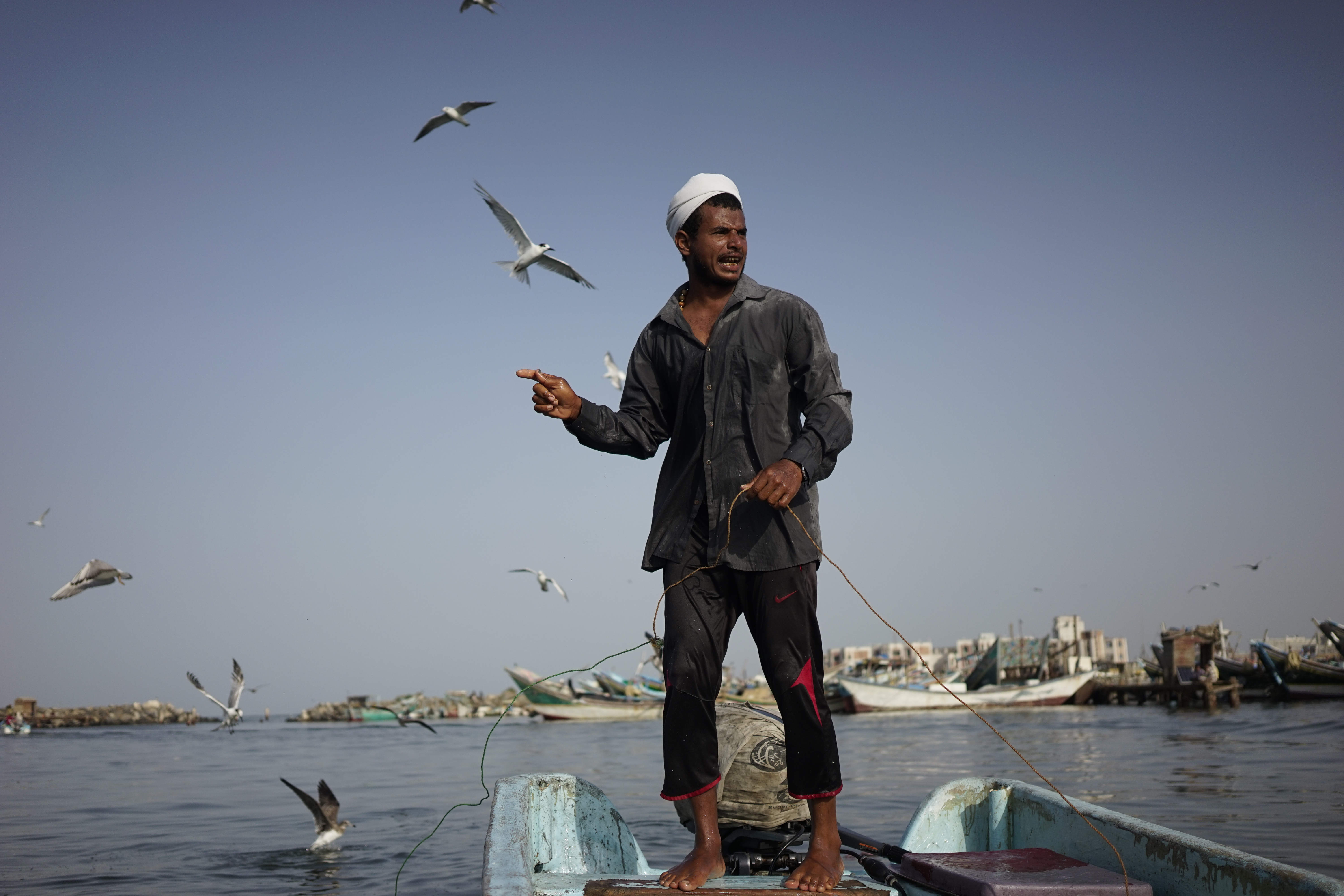
Figure 3. A fisherman prepares his boat in the Red Sea port of Hodeidah (Amira Al-Sharif, n.d.).
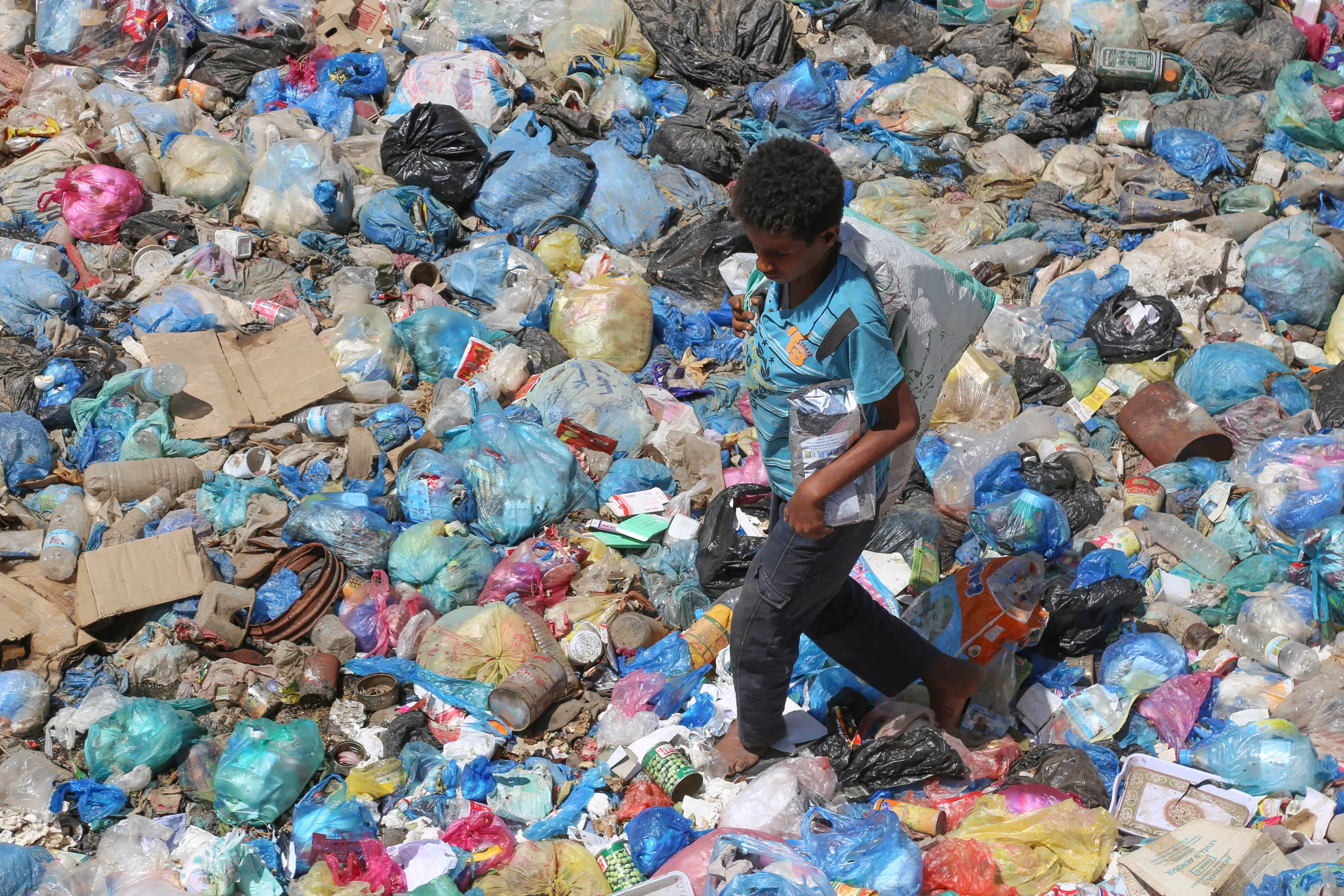
Figure 4. Boy collects scrap to resell from piles of trash in Taiz city (Ahmad Al Basha/ICRC, n.d.).
Al-Basha’s visibility in the Yemeni social and photojournalist field redirects his focus towards war-related disasters that are already visible in the media. Furthermore, his choice of the photographic angle reflects his compliance to the systems of power he is a part of. It flattens the walking boy and the soil. It visually constructs a hierarchical view of the plastic bags which emphasises the superiority of humans over environment. It highlights the fact that human activities produce garbage, threatening the life of flora and fauna of Taiz. The minor seems swallowed by the sea of garbage to the point that he disappears in it. The colour of the boy’s shirt, recalling the same colour of the multiple plastic bags, reinforces this effect. The negative tone oozing from the shot suffocates Taiz urban landscape with pollution, portraying fauna and flora survival and recovery as almost impossible. Temporally, Al Basha’s reiterates the negative tropes of civilians in conflict zones. The pollution, causing the diffusion of cholera, aggravates the conditions of civilians already disadvantaged by war times. Suspended in the cyclical dimension of conflict-related fatalities, civilians remain at the ineluctable mercy of disasters (as per “eternal-present”). Al Basha also constructs space as a hostile and dangerous territory. The spread of cholera threatens to human and animal health, creating a suffocating space in which projecting a future life is impossible (as per “space-claustrophobia”). Ideologically, Al Basha mirrors men’s privileged conditions by reiterating anthropocentric and colonialist understandings of the Yemeni environment. In his photograph, humans and environment are in a hierarchical relationship. By poisoning habitats and animals, humans are portrayed as dominating and negatively affecting Taiz flora and fauna. This photographic gaze highly justifies colonialist interventionism: Yemen being in desperate need of a benevolent god-sent Western intervention. Western countries become the only possible deus ex machina able to save Yemen from the cataclysm of imminent environmental and human disasters.
Differently from Al-Basha, Al-Sharif invisibility within the patriarchal Yemeni society and photojournalism industry shapes a narrative of Yemen that is invisible in mainstream media. Al-Sharif uses a wide angle to relate the fisherman to a perceptually expansive environmental setting rich with animals and other constituents, constructing visually an equalitarian relation among humans, flora, fauna, and environment (note for example the harmonious coexistence between the fisherman and the seagulls). The gamma of saturated blue and cyan conveys a sense of peace and harmony between humans and fauna. Al-Sharif’s use of positive accents to portray animals and environment transforms Yemen from a battlefield to an ethereal and quiet space. She frames the Hodeidah environment as extraordinarily thriving. The several seagulls flying in her landscape, the predation act of one of them reaching the surface of the blue water, and fishermen’s presence indicate the abundance of fish in the area. Contrarily to Al Basha’s and the mainstream media’s tendency to frame animals in conflict zones as existing in the liminal space between presence and absence, life and death, she portrays Yemen as a protected space where perpetual desperation gives way to the possibility of future paradisiac ecstasy in catastrophe’s aftermath (as per the “aftermath-catapult”). Untouched by war tragedies, Yemen becomes a place of serenity, a space in which future is plannable (as per the “out-of-war-space” effect).
Al-Sharif’s employment of what I call the “phoenix-from-war-ashes” effect dismantles colonialist understandings of civilians in the context of war. While conventionally only Western actors are photographically framed as the only ones capable of establishing physical and psychological stability through intervention (whether military or otherwise), Al-Sharif proposes a counter-colonialist gaze on Yemen. Not only that civilians can live in a peaceful and stable Eastern territories without the presence of Occidental institutions and governments, but this condition of stability and peace can also exist outside the presence, control, and jurisdiction of Western institutions and/or militaries. By foregrounding beauty and life, this photographic gaze on Yemen treats interventions by or presence of Western actors as completely unnecessary, thus contesting potential military or political Western interventionism.
The mirror gaze framework that I have developed establishes intersectionality as a practical methodology to understand how war photographers document war. I invite other scholars to explore the decisive impact that sector-based inequalities have on photographers’ portrayals of conflict and disaster.
Antonietta Molea with a framed portrait of her infoibato father, Domenico in Trieste, Italy (© Angela Varricchio, 2007, from the archive of “The Julian-Dalmatian Question: A denied Truth,” 2007-2008).
Angela Varricchio (b. 1979, Benevento, Italy) is a photojournalist, conflict documentarist, and scholar of visual culture. She received her PhD in Media and Cultural Studies from Lancaster University, where her research examined how gendered and racialised disparities shape oppositional gazes on war. Her work engages with feminist media studies, visual rhetoric, and the politics of representation, focusing on the aesthetics and ethics of conflict photography.
Angela Varricchio, “The Mirror Gaze,” JVC Magazine, 5 June 2026, https://journalofvisualculture.org/the-mirror-gaze/.