
December 2025
My own artistic practice and research examine the spatial politics, and the psychopathology of the White Cube. This precursor to my wider writings analyses the gallery space as a Schizoid, outlining my theory that the works of art housed there are reterritorialized into marketable and sterile assets for a docile audience to consume.
The spectacle is capital accumulated to the point where it becomes image (Guy Debord, The Society of the Spectacle, thesis 34).
In addition to the theories laid out in 1972 by Giles Deleuze and Felix Guattari I have also broken the text up with my own unsanitized field notes, this was a deliberate creative choice to fracture the psychopathology of the Cube further, as an act of resistance on the part of the author.
Examining the White Cube’s phenomenology through Deleuzian and Guattarian (1972) schizoanalysis, the audience can understand the gallery as a space of endless reterritorialization. The White Cube reterritorializes into marketable and sterile assets the schizoid energy of transgressive and progressive artworks—pieces that by their design and very context push the boundaries of spectacle—and, in doing so, the boundaries of the human experience. The outcomes of this process of reterritorialization are not just commodities but also military-grade weapons used against the very public that survive on its cultural bounty. The weapons that the White Cube takes aim with are the structures it creates, used to control and manipulate the bodies of those that experience it. Like a dictator turning on dissenters, the White Cube takes up arms against those that question its jurisdiction. It dictates the narrative. It castrates the works that it claims to present. The White Cube consumes its curators, forcing them to translate the untranslatable into clinical, utilitarian wall texts that frame the narrative it deems as correct and ultimately punishing dissent.
Capitalism makes art boring, the white cube makes art boring, we aren’t machines, we are artists (author’s field notes, October 2023).
The Asset Strippers (Mike Nelson, 2019) at Tate Britain
A gallery is constructed along laws as rigorous as those for building a medieval church (Brian O’Doherty).
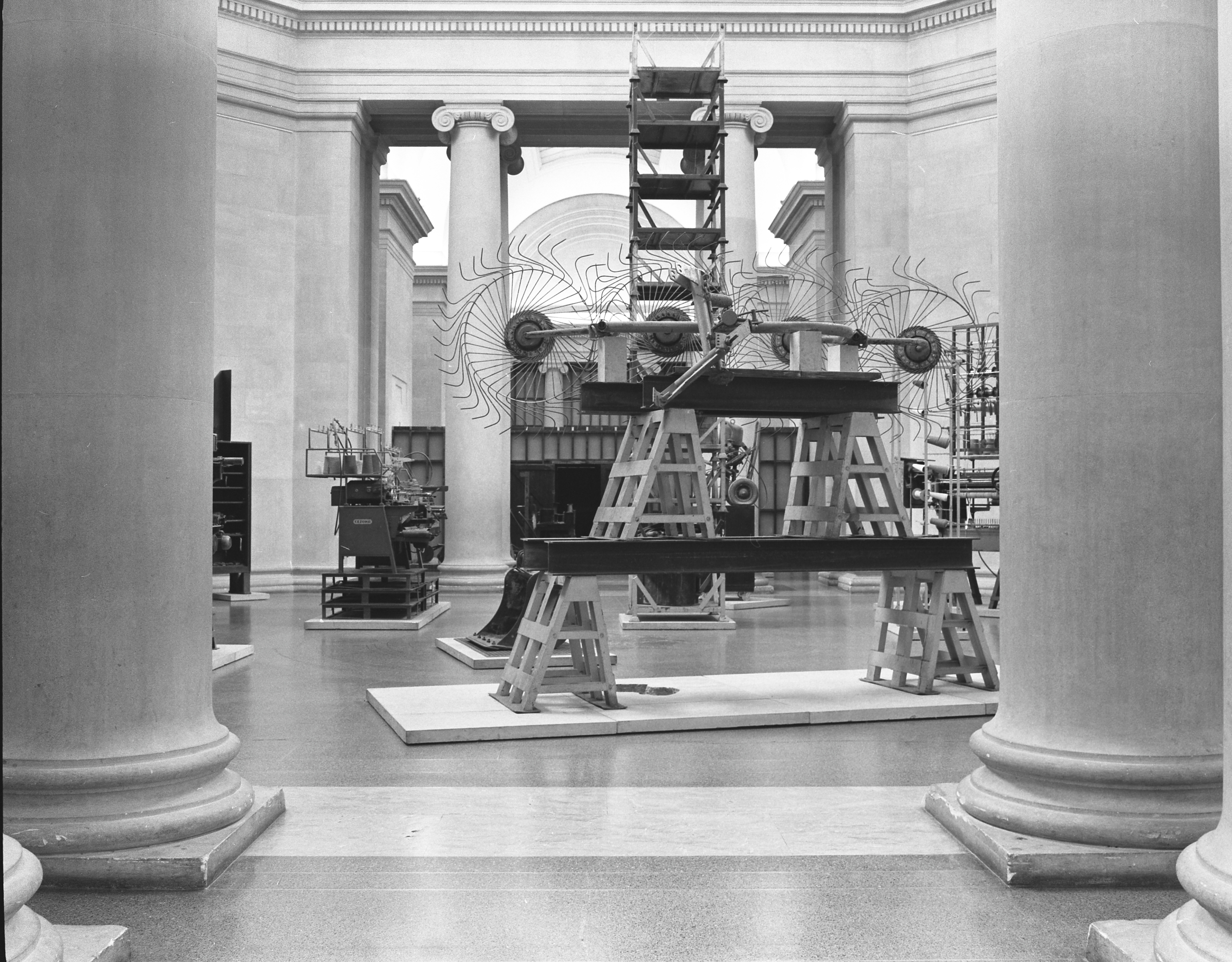
In 2019 the Tate Britain commissioned a solo exhibition by Mike Nelson. The official exhibition webpage stated that he “has transformed the grand spaces of the Duveen Galleries into something between a sculpture court and an asset strippers’ warehouse.” At the time I wrote a short review of the exhibition on a now defunct blog, where I discussed Nelson’s meticulous curation of the space. I mused on how he (and the curatorial team) could move such large machines into the space, whilst keeping so much of their history intact (figure 1). The cobwebs, the dust, the stories were all still very much present within the clinical neutrality of the Tate Britain (figure 2). This particular installation by Nelson was built around the placement of a variety of now-obsolete objects (figure 3) that he is said to have associated with his childhood: industrial machinery, woodwork stripped from other buildings, inflatable objects of some variety (the list goes on but I am drawing this purely from the my own failing memory—the enduring oily stain that this exhibition left on my brain).
Figure 1. Installation view of Mike Nelson’s The Asset Strippers (2019) photographed by Mike Nelson, and courtesy the artist and 303 Gallery, New York; Galleria Franco Noero, Turin; Matt’s Gallery, London; and neugerriemschneider, Berlin.
By deterritorializing these objects, stripping them of their historical contexts Nelson placed them in a space that, as I have argued previously, doesn’t just thrive on the very opposite of context-specificity but rather feeds on reterritorializing it. Nelson led an insurrection within one of the country’s most lauded gallery spaces. Not only did these machines represent a past that is no longer attainable. By placing them at the epicentre of exploitation—the White Cube that is built on sugar, and slavery—he brought into question the entire colonial history of the institution’s name. What is fairly innocently described as a memory reflecting on a lost childhood, was in fact a decisive blow targeted at the heart of the White Cube itself.
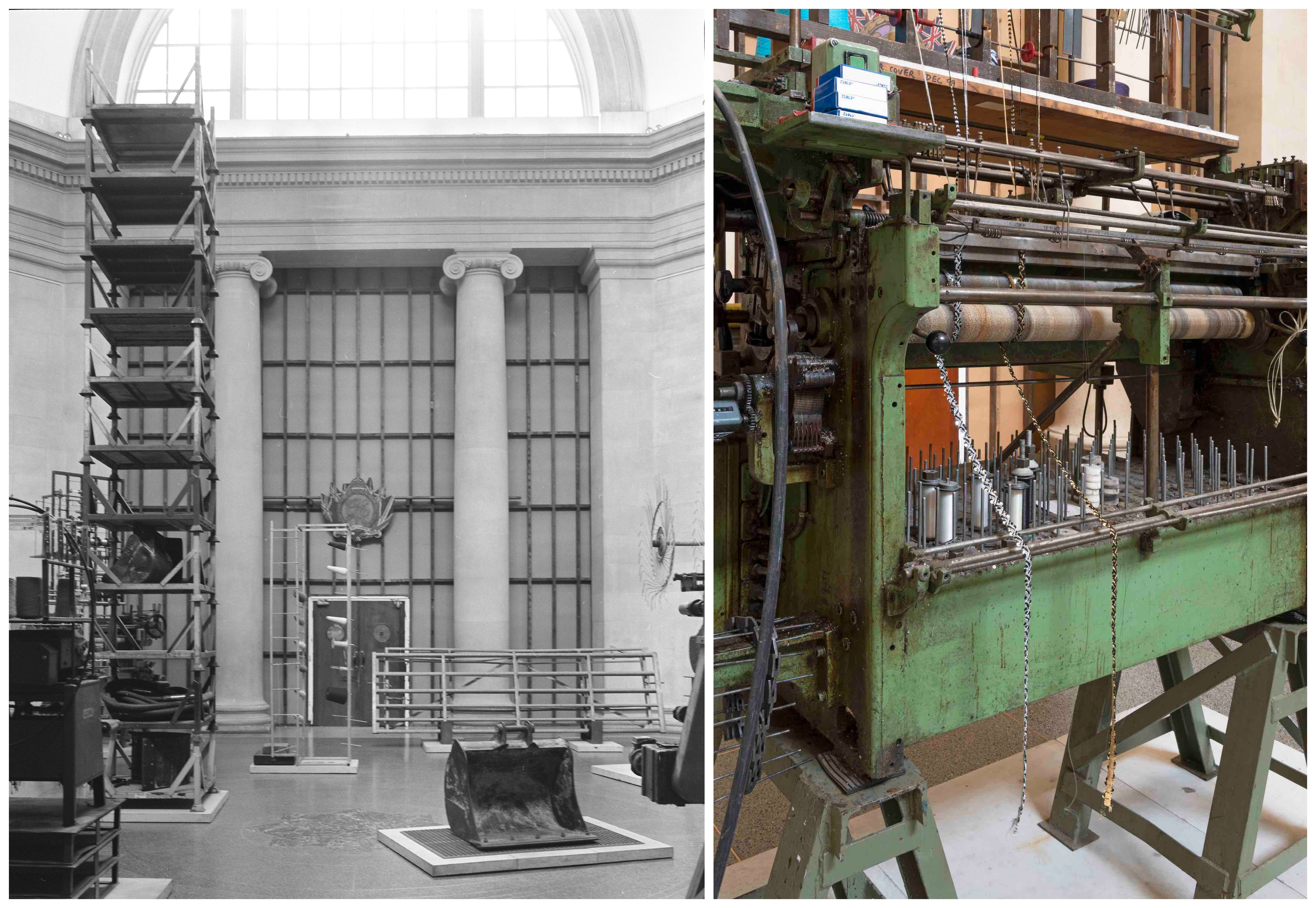
Figure 2. Installation view of Mike Nelson’s The Asset Strippers (2019) photographed by Mike Nelson (left) and Matt Greenwood (right), and courtesy the artist and 303 Gallery, New York; Galleria Franco Noero, Turin; Matt’s Gallery, London; and neugerriemschneider, Berlin.
The White Cube is a vacuum that inhales only profit (author’s field notes, July 2020).
Ultimately the insurrection was short lived, still confined by the control and the order that the White Cube demands, although the grime, the dust, the dirt, the facade did fall if only briefly revealing the phenomenological conflict beneath manifesting in the form of mechanical stench, the oily and industrial everything that the clinical White Cube exists to dominate. Regardless of how much the White Cube tried to contain, the filtration systems of the gallery were unable to slow the sensory onslaught that these objects represented. Nelson deterritorialized the space. The machines that Nelson curated were contained in an ocular sense within the sterile space. Yet, they were simply too big, too grotesque, too real to be contained by the micro fascism of the space on any other sensory level. They spilled over in other ways, and by design, the extra sensory is Nelson’s desiring flow.
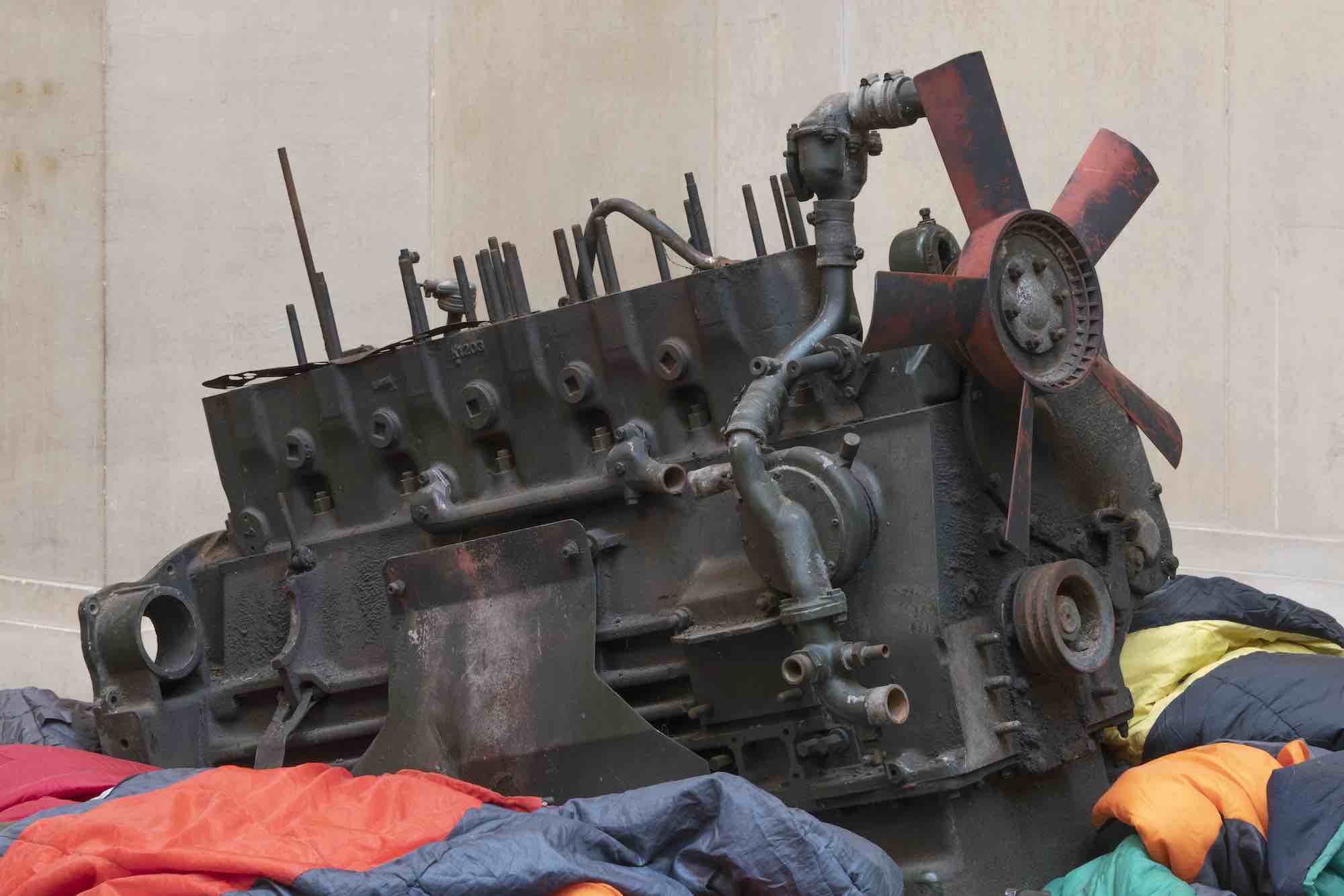
Figure 3. Installation view of Mike Nelson’s The Asset Strippers (2019) photographed by Matt Greenwood, and courtesy the artist and 303 Gallery, New York; Galleria Franco Noero, Turin; Matt’s Gallery, London; and neugerriemschneider, Berlin.
It is this desiring flow, libidinal and chaotic, with all the messiness and the joy that comes with this label, that defines what art is. Aiming to contain artworks by using a system that sets out to not only control how we flow through its architecture but also how our bodies feel and exist within the space, the White Cube sets out to colonize our brains with its straightened thinking. Forcing its need to control all flows that exist within its parameters, it becomes a social machine coding the interactions that take place in and around it to ensure the maintenance of its own gatekeeping.
The White Cube’s primary method of neutralization is linguistic. As noted earlier, the machine consumes its curators. The numb wall texts act as a form of institutional lobotomy; they are the tranquilization tool of the gallerial machine. Standing amongst Nelson’s machines in 2019, I watched visitors move from the grotesque, oily reality of an industrial engine to the sanitized safety of the wall text and the gallery handout, seeking refuge in the safe, familiar, and controllable narrative.
The machine cannot and will not allow a desiring flow to remain uncoded. It wrapped the industrial stench in a linguistic shroud that pacified the spectator, soothing them with the knowledge that everything was under control, that the insurrection was merely a curated performance. This is the ideology of the institution: it takes the libidinal mess of industrial collapse and retrerritorializes it neatly into a manageable, educational moment that does not threaten the neoliberal status quo.
The White Cube attempts to commodify the transgressive works that exist within its whitewashed walls, making explicit that which it contains is effectively dead. The works presented to the spectator in any iteration are simply a capitalist machine. In reframing objects of industry, Nelson turned the tables. Instead of being contained, he reterritorialized the gallery itself.
The Duveen Galleries are not the neutral containers the White Cube would have you believe. They are the imperialist sculpture court of the state machine. By placing the industrial at the epicentre of a space built on the profits of sugar and slavery, Nelson did more than reflect on childhood. He staged a visceral confrontation with the colonial ghost of the Tate machine. The Duveen’s neoclassical look is designed to make the human body feel small, and subservient. Inside the Duveens’ cathedralesque halls, the body is silenced, deprived of a voice to speak with. By contrast, Nelson’s machines screamed from the depths of their mechanical lungs. They emitted their sensory onslaught, their mechanical stench that the gallery’s filtration systems could not fully scrub.
This is the Schizoid break.
The visual sense was captured by the sterile Cube. But the industrial and the haptic spilled over, committing a sensory jailbreak that momentarily fractured the psychopathology of the space.
How the machine maintains itself
I’d still sell out if some maniac billionaire wanted to buy my paintings (author’s field notes, December 2018).
The Tate infamously laid off workers during the pandemic, not remotely unusual, I myself was made redundant following the ending of the furlough scheme. Granted, this was from a job that was incredibly miserable, and its loss ultimately started my move into education.
The institutional hoarding at work in the gallerial machine is not just a visual point. It is structural. During my research I bookmarked two recent vacancies via the Instagram account Call for Curators: a Senior Curator role at £50,000 and an Exhibitions Assistant at £29,000. Both roles were based onsite at the Tate Modern. In the context of central London’s economy, these figures function as a filtration system. By offering effectively poverty wages (within the metropolis) for entry level professional roles, the Tate ensures its Social Machine is staffed by those with the private wealth necessary to subsidize the institution’s prestige, greasing the gears for the machine to evermore churn out its particular brand of gatekeeping.
Contrast the low rate of pay for their employees against the paywalled use of images–even for research purposes–and the machine wears its contradictions not with pride but with disdain for us whether inside or outside of its mechanism. It sneers at us, and strips away our autonomy, converting wild creative thought into a marketable asset. It is not just the corporate gallery that commits these cruel acts. They exist within every aspect of neoliberalism. Artistic desiring flows are contrary to the money-making machine, unless they can be digitally archived and converted into economic assets.
With seven years standing between now and my encounter with Nelson’s machines, the insurrection feels less like a historical exhibition, more like a final uprising crushed too soon by the corporate beast. In 2019, the friction between the mechanical stench and the pristine White Cube was a visceral break in the system. Today, that friction feels all but smoothed over by a more totalizing digital enclosure. The paywalls have hardened, the digital archives have been diluted, and the poverty wages of the gallerial machine remain a static, systemic prerequisite for its survival. The issues outlined seven years ago have not merely persisted. They have accelerated, reterritorializing the libidinal into the marketable with a forensic efficiency that makes the original insurrection now feel spectral.
In lieu of a conclusion
Ultimately, the White Cube is a machine designed for disappearance. In this context it disappeared my blog, it disappeared the industrial history of Nelson’s machines by neutering them into art, and it continues to disappear the autonomy of its workers through poverty wages.
It’s fucking exhausting, auditioning for a role working in a machine that has already decided I’m obsolete (author’s field notes, February 2023).
This text is my own attempt at a reterritorialization of my own. By fracturing the text with unsanitized field notes, I am refusing to provide the clinical, utilitarian narrative the White Cube demands. If the machine wants to hoard wealth and gatekeep our memories, then our only response is a schizoanalytic sabotage: to keep our desiring flows messy, loud, and oily, long after the gallery lights have been turned off.
Postscript
The images that should accompany this text are available and can be found here; they are however absent from the body of this article or rather, they have been reterritorialized. Having spent hours trawling the internet archive for fragments of my now defunct blog, ‘Harrying of the North,’ I found that the primary record of my encounter with Mike Nelson’s machines has been liquidated. I was able to find one sole photograph buried deep in my camera roll. This has been used as the header of this article. The remaining images are sequestered behind a paywall. In seeking to replace my lone photograph, I was confronted with the Tate’s own asset stripping mechanism: a base level charge of £95 per image for educational use. This fee serves as full vindication of the thesis below, many major art institutions of our time are not public trusts, but profit-making machines designed to hoard wealth and gatekeep the visual commons.
Installation view of Mike Nelson’s The Asset Strippers (2019) photographed by Mike Nelson, and courtesy the artist and 303 Gallery, New York; Galleria Franco Noero, Turin; Matt’s Gallery, London; and neugerriemschneider, Berlin.
Declan Ackroyd (MFA, Northumbria University) is an artist, educator and independent researcher based in the Northwest of England. His work utilizes a framework of schizoanalysis and psychological autopsy to interrogate the spatial politics and micro-fascisms of the White Cube. Focusing on institutional sequestration and the enclosure of the visual commons, his writing spans art and cinema to advocate for nomadic cultural futures that resist the clinical narratives of the state machine. The author would like to thank Emma Leach, and the rest of Nelson’s representation for their kind gift of the use of the images within this piece—a rare goodwill gesture in this corporate landscape.
Declan Ackroyd, “The Schizoid Gallerial Machine,” JVC Magazine, 7 May 2026, https://journalofvisualculture.org/the-schizoid-gallerial-machine/.