December 2025
December 2025 Issue Features:
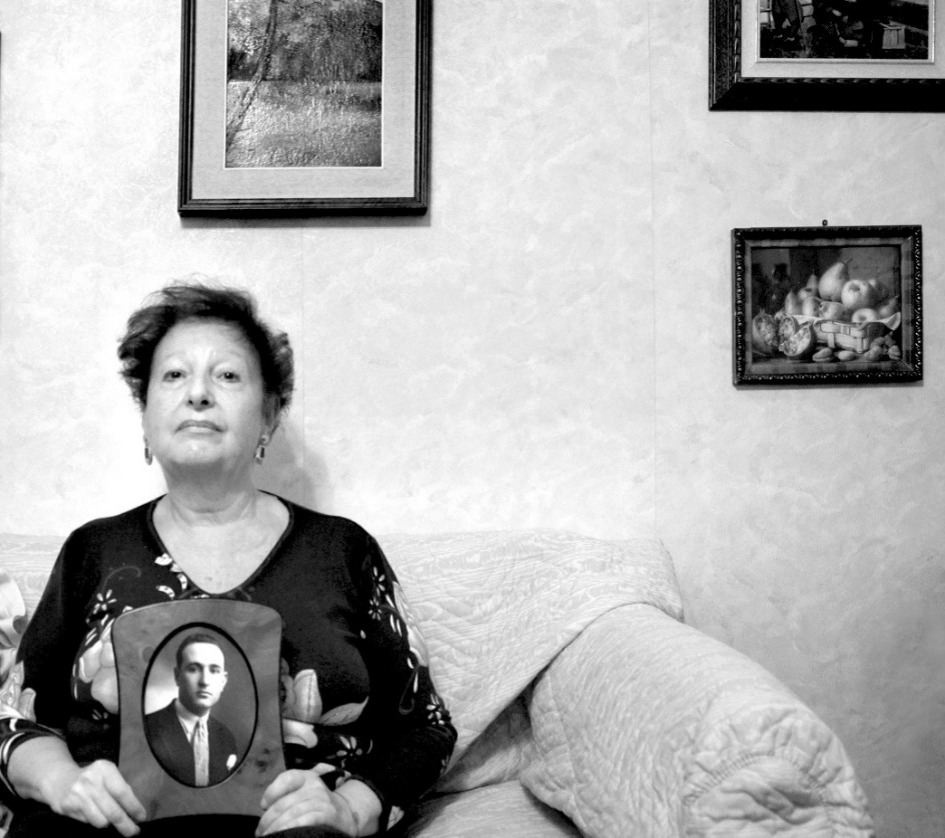
Weaponized ecologies: how cinema addresses nature’s complicity in enforced disappearances
Enforced disappearance is a global problem, which has devastated communities on every continent of the world. Sometimes resolved by the eventual discovery and excavation of clandestine graves, more often the meticulous searching for the abducted and denied offers no lasting resolution as the body is never recovered. Due to the global nature of the problem, it has also taken place in every known environmental setting, from familiar places of human habitation to those defined by ecological hostility and impenetrable environmental conditions. This article looks at how cinematic works (including Nostalgia for the Light, The Dupes and El Mar, La Mar) deal with the weaponization of various ecologies in the context of enforced disappearances and how this particular aesthetic register offers insights on material witnessing in the context of mass atrocities.
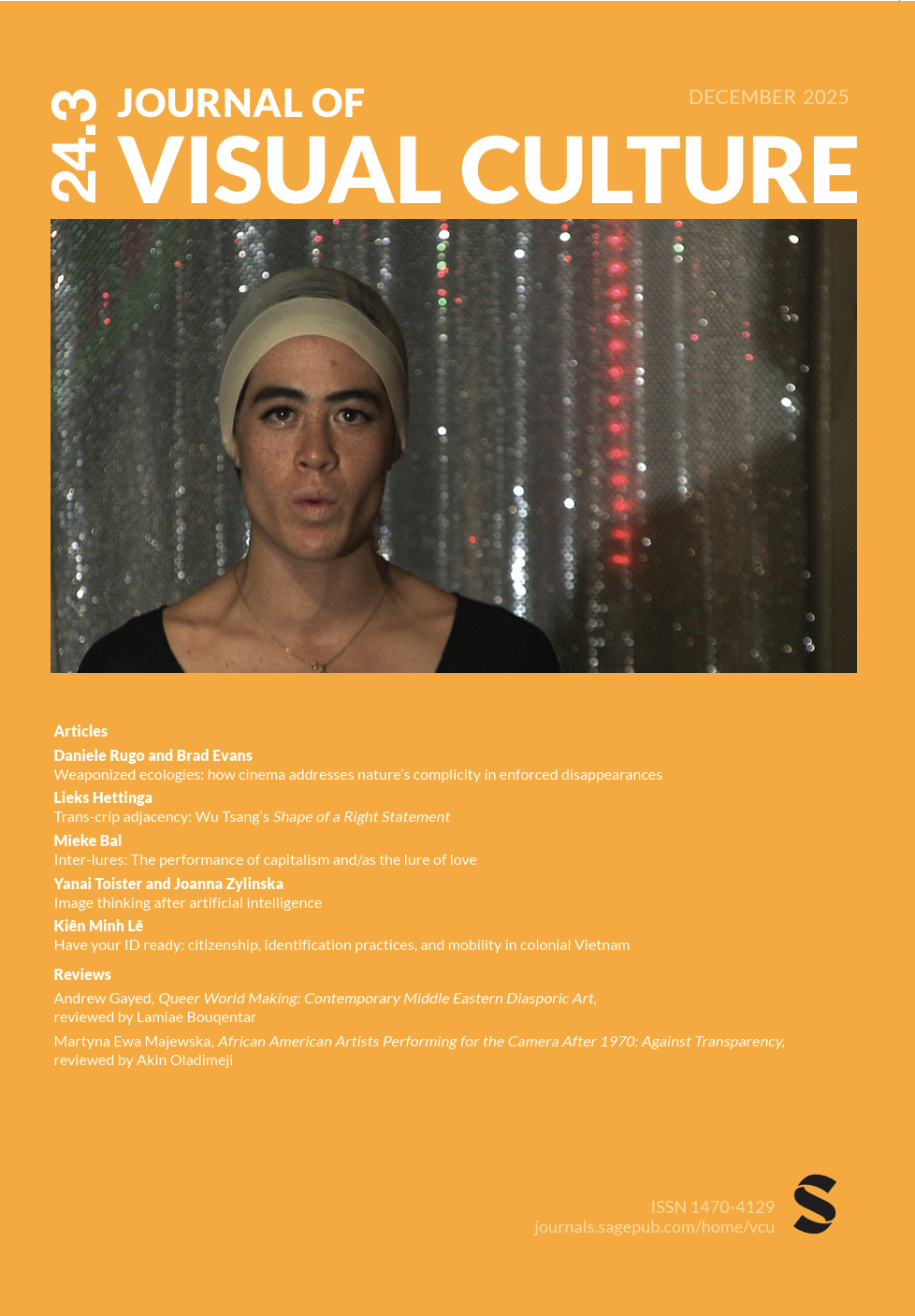
Trans-crip adjacency: Wu Tsang’s Shape of a Right Statement
This article explores how the entanglement of transness and disability can be understood through a performance of adjacency. The author approaches this question through a close reading of the video-performance Shape of a Right Statement (2008) by Asian-American artist Wu Tsang, in which she re-stages the video statement In My Language (2007) by the late autism activist Mel Baggs (1980–2020). Shape of a Right Statement deploys three key formal techniques that help us grasp how trans-crip adjacency is performed: a practice of trans-vocalization that materializes an alienation from hegemonic language, an unsettling of authenticity through the labor of staging and a practice of hosting that opens one’s body to another. In doing so, the entanglement of ‘transgender’ and ‘disability’ operates not through analogy but through adjacency, pointing to the affective labour of inhabitation which complicates the epistemological, political and aesthetic coherency of ‘transgender’ and ‘disability’ in productive ways.
Inter-lures: The performance of capitalism and/as the lure of love
This article is based on Miele Bal’s second session after her inaugural lecture at the Collège de France in 2023. She reflects on the relationship between textual and audio-visual images. She argues that filmmaking has two advantages as a research method, an integration central to this article: an intensity of looking and collaboration: working with, rather than looking at, other people. She reflects on the relationship between textual and audio-visual imaging. She also presents the theoretical, aesthetic and social issues that pertain to the transformations of literary and audio-visual media, and of past into present and vice versa; anachronism as a way of thinking. She considers some functions images can fulfil and the way images are generated not by stories but by reflections inherent in stories and modes of storytelling. At the heart of the article is the performance/performativity dialectic; how performing roles cannot remain without performative effects.
Image thinking after artificial intelligence
Yanai Toister and Joanna Zylinska
This article proposes that, through synthesizing language acts with visualization processes, generative AI is currently altering the architecture of human cognition, necessitating a new way of understanding our relationship with images. The multifaceted concept of ‘image thinking’ offered in its title refers to: (1) our human thinking about images – a key area of enquiry for Visual Culture; (2) image generation through cognitive processes, be they human or machinic; and (3) images themselves being agents of thinking. Both Visual Culture and Neuroscience use the notion of ‘the mental image’, which is premised on the belief that humans form internal pictures in their minds from words and concepts. Those pictures subsequently facilitate how we see – and know – objects and phenomena. Today a novel feedback loop between language, vision and imagery has emerged, with machines being able to generate images from textual prompts. This latest technological development blurs the line between human imagination and algorithmic generation, thus calling for a radical reassessment of how we perceive, imagine and understand the world. Moving beyond the frequent dismissals of synthetic imagery as average, banal or ‘mean’, the article offers a Vilém Flusser-inspired critical approach that seeks cognitive opportunities for us within the current cultural moment.
Have your ID ready: citizenship, identification practices, and mobility in colonial Vietnam
This article examines the adoption of photography in the surveillance efforts of the French colonial state in Vietnam before World War I. Through the colonial state’s historical documents, prison records, and photographs, the author investigates the role played by photography in relation to new ideas of citizenship and racialization, and argues that photography is a medium of colonialism and modernity, insofar as it is not strictly a Western technology but a consequence of cultural contact and negotiations. Specifically, the article examines the institutional practice of photography in three areas: prisons, immigration, and municipal tax system through three case studies of Poulo Condor, Haiphong, and Hanoi. Together, they build an overarching narrative of how photo identification, despite its limitations, became a standard practice in colonial Vietnam and preceded its widespread application in France in the 1940s. In doing so, this article highlights how colonies were historically treated as laboratories for new scientific endeavors. The author does this in order to argue against a linear narrative of progress that treats Europe as an incubator of innovations in the 20th century.
–
https://journals.sagepub.com/toc/vcua/24/3