December 2025
Journal of Visual Culture editorial collective member and editor of its online magazine Eray Çaylı (EÇ) speaks with curator Dicle Beştaş (DB) about the exhibition Sediment/Xilt (held from 15.11.2024–15.2.2025 at < rotor > in Graz, Austria, and co-curated by Başak Şenova).
EÇ: Most works featured in Sediment/Xilt are all by Kurdish women artists who come from around your hometown of Amed (in Turkish: Diyarbakır), Turkey’s largest predominantly Kurdish-inhabited city. Alongside them, Hristina Ivanoska from Skopje (North Macedonia) and Barbara Schmid from Graz (Austria) are also featured. I want to begin by asking what led you to this women-only selection and how you would describe its significance.
DB: My engagement with this constellation predates the exhibition by many years. As you said, I’m from the region. The landscapes, languages, and political fractures that inform these works are not distant subjects of research for me; they constitute the environment in which I grew up and continue to think. This proximity has shaped my curatorial position. Still, I do not approach these works as representations of political fractures. I consider them forms of knowledge produced from within conditions of militarization, extractive economies, infrastructural disruption, and forced displacement.
I worked as program coordinator (2019-2024) at Loading Art Space in my hometown Amed (figure 1). Working closely with Loading’s contemporary art archive that features artists from the region, I revisited numerous projects over time. Gradually, I observed that some of the most sustained material investigations into land, residue, ecological transformation, and intergenerational memory were being developed by women artists. This was neither a curatorial premise at the outset nor an attempt to assert a gendered aesthetic. Rather, it reflected a structural observation about who was persistently working through these questions in the region.
Here artistic production unfolds within a dense matrix of political pressure and everyday negotiation. Under such conditions, practice often develops through long-term material engagement, bonds between people, and forms that resist monumentality. Of course, I don’t mean to simply say that this is how women work. This way of working is shaped by social and political circumstances in which women artists frequently navigate layered forms of marginalization, both within the region and within global art circuits.
Kurdish women, in particular, are often mobilized as political imagery, figures of resistance or suffering, while being less frequently recognized as autonomous cultural agents. The women-centered constellation in Sediment/Xilt was therefore not conceived as symbolic correction or protective framing. It was a structural decision: to allow these practices to converse with one another without being positioned as exceptions or tokens within a broader field.
To return to why the exhibition extended beyond the region, we included the two artists working in other European contexts, such as North Macedonia and Austria, because their engagements with rivers, soil, and environmental governance unfolded within different yet comparably layered political terrains. This was an intentional juxtaposition. It allowed us to examine how ecological questions travel across geographies without collapsing their specificity.
If, as you argue in your book Earthmoving, extractivist aesthetics privileges visibility, monumentality, and the rapid conversion of land into spectacle or resource, the works featured in Sediment/Xilt operate otherwise. They attend to what settles, accumulates, and persists. The women-centred structure was not an identity statement but a way of foregrounding practices that insist on relational, situated, and materially grounded forms of value, forms that exceed the logics of extraction.
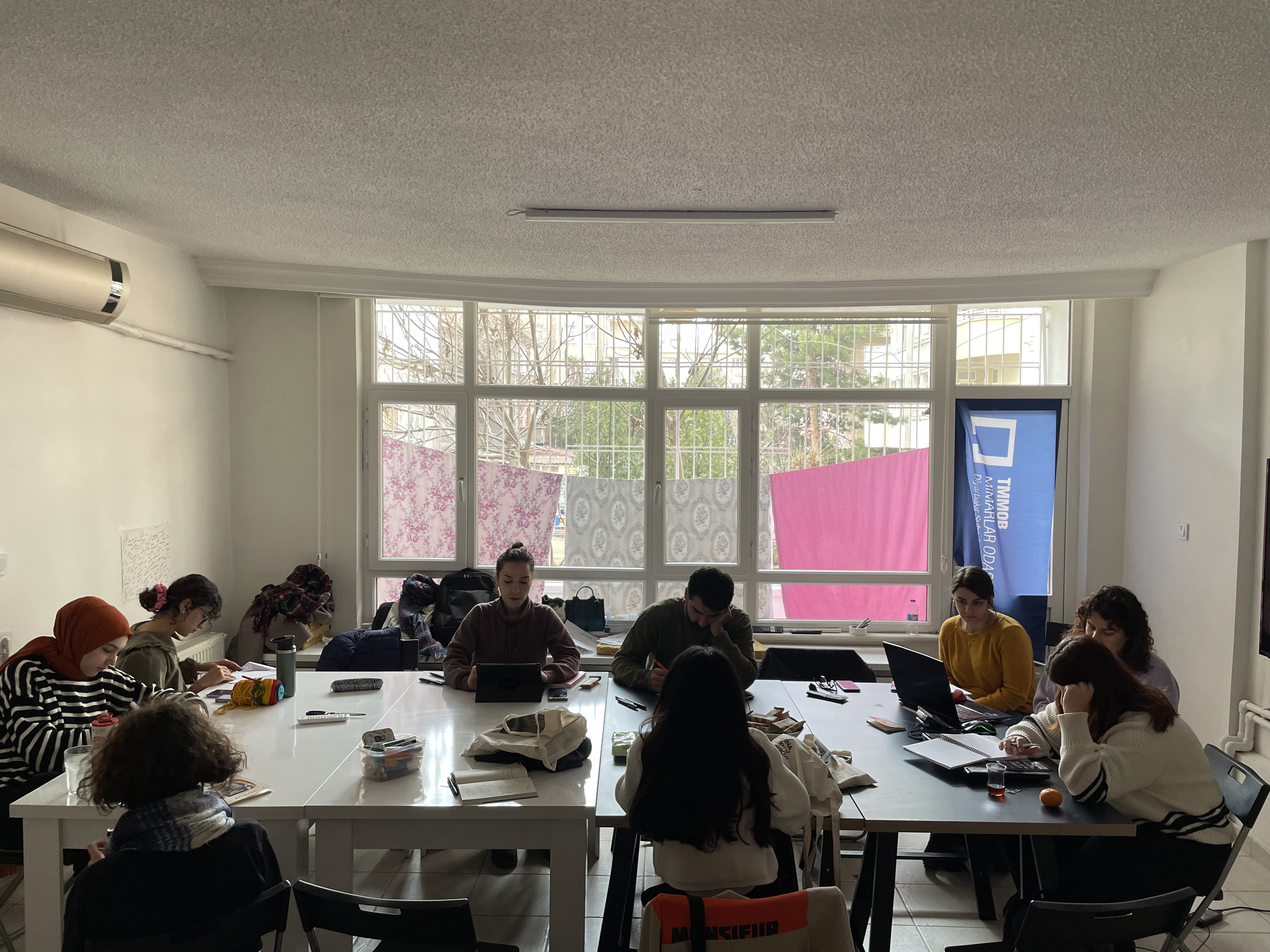
Figure 1. “Amed Urban Workshop (2nd edition): Rethinking Resilience and the Architecture of the Future,” organized by Diyarbakır Chamber of Architects in collaboration with Tarabya Cultural Academy (İstanbul), and programmed by Dicle Beştaş with Loading, 2023 (photograph by Dicle Beştaş, 2023).
EÇ: The exhibition title “sediment” invokes an element that is a residue, a leftover, and a remnant of environmental processes. Colonialism and racial capitalism consider residues, leftovers, and remnants as valueless. The question of value is one I grapple in my new book which you just mentioned and which approaches extractivism as a visual cultural question with a focus on northern Kurdistan. I understand extractivism as a racialized logic of valuing the regions and peoples it afflicts only in terms of quantitative measurability and marketability. It is perhaps not a coincidence that the exhibition’s Kurdish title “xilt” means not only “sediment” but also “low-quality” or “off-grade,” which conveys a sense of diminished value.
Various works in Sediment/Xilt engage critically with the question of value and how racial capitalism and colonialism produce it environmentally. Rozelin Akgün’s work centres weeds and leftovers from corn and cotton harvests, which conventional practices of landscaping and farming have considered worthless at best and a nuisance at worst (figure 2). In Barbara Schmid’s work, we encounter debris from buildings destroyed by earthquake and by counterinsurgency–residues of capitalist and colonial environmental violence (figure 3). Schmid also uses purslane, a vegetable that is rated highly in Kurdistan as a culinary ingredient but is largely considered a valueless weed in Austria and elsewhere (figure 4). In Hristina Ivanoska’s work, it is perhaps the River Vardar itself that sectarian politics has come to treat as a worthless object, one without a history, a politics, and a social significance of its own, except as a border that separates territories or as an environmental hazard that threatens to flood (figure 5). Leyla Keskin’s works feature animal species whose death is seen as collateral damage in the course of colonial capitalist developmentalism (figure 6). In one of Rojda Tuğrul’s works we encounter a turtle species in a similar way (figure 7). Her other work—the one about Dêrsim—concerns a region that the Turkish state has attempted to turn into an internal border by creating an entirely fabricated entity called Tunceli, dividing the Kurdish region from the Turkish one and Alevi populations from Sunni ones, and seeking to homogenize those regions/populations in the process (figure 8). In Aylin Kızıl’s work, the urban poor living in the historic district of northern Kurdistan’s sociopolitical heartland Amed–displaced once already in the 1980s and 1990s due to the state’s scorched-earth counterinsurgency campaign in the countryside–are rendered disposable yet again due to an urban transformation project that values the district only as a tourism destination (figure 9). It could be argued that Kızıl’s insistence on forms associated with documentary photography aims to recognize the value of these communities in a way that is legible to established cultural recognition norms. The medium itself is relevant here; photographs are residues of complex social processes that involve carrying the camera, pointing it somewhere, posing, negotiating with the photographic subject immediately before, during and right after the pose, and so on. Yet photographs tend to be valued not because they are residues of such social processes but rather for what they show as self-evidently truthful objects of representation.
Critical engagement with environmental residues and with their attendant perceptions of value and/or valuelessness characterizes not only each of the works being exhibited but also your exhibition design, which uses scaffolding as its main physical element. Scaffolding is an element that conventional architectural practice considers to only be of supplementary and temporary value—secondary to architectures proper. How does the exhibition and the works it features deal in and with the question of value? What ways of valuing life and environments otherwise–outside of and beyond extractivism–might these works help us imagine and practice?
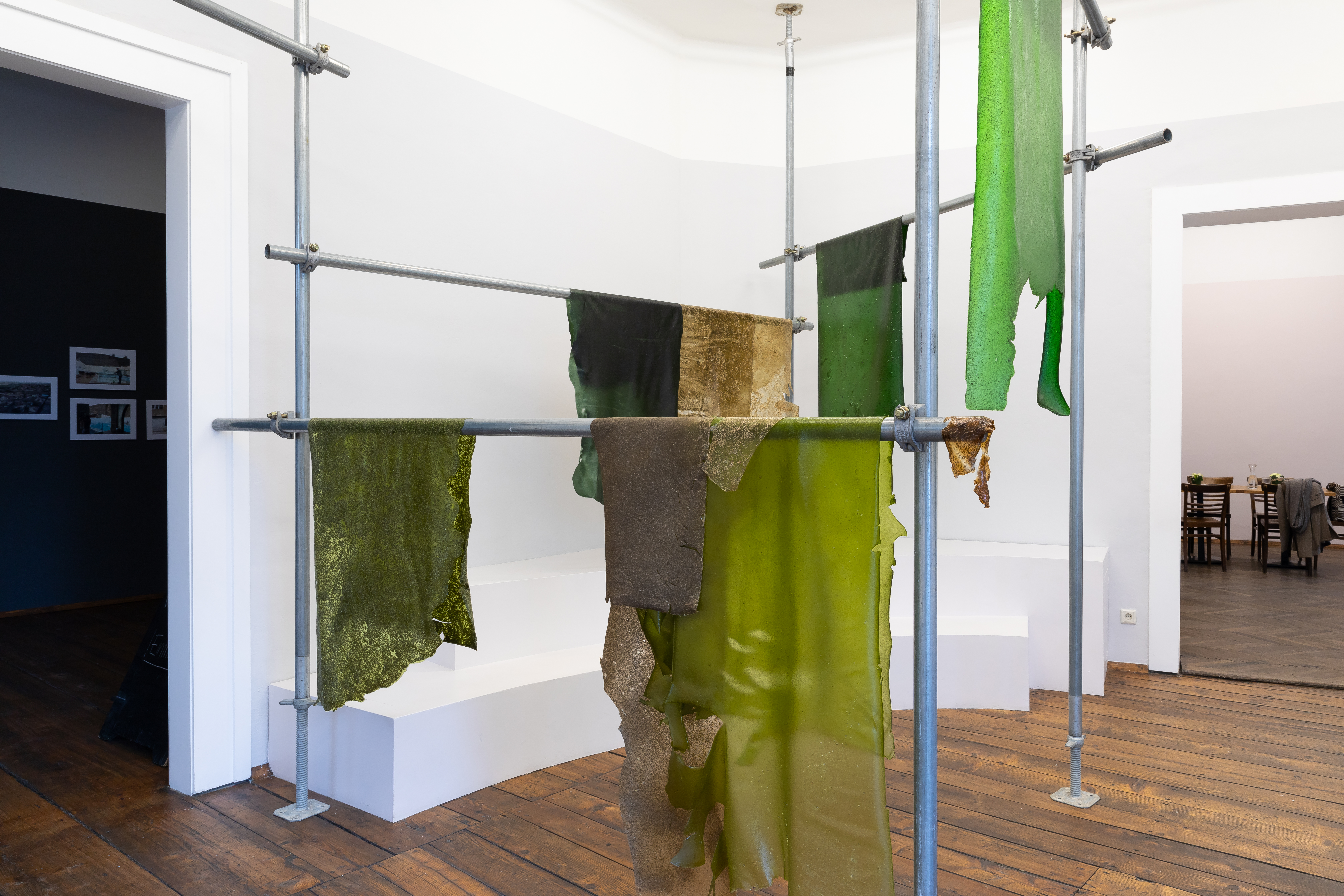
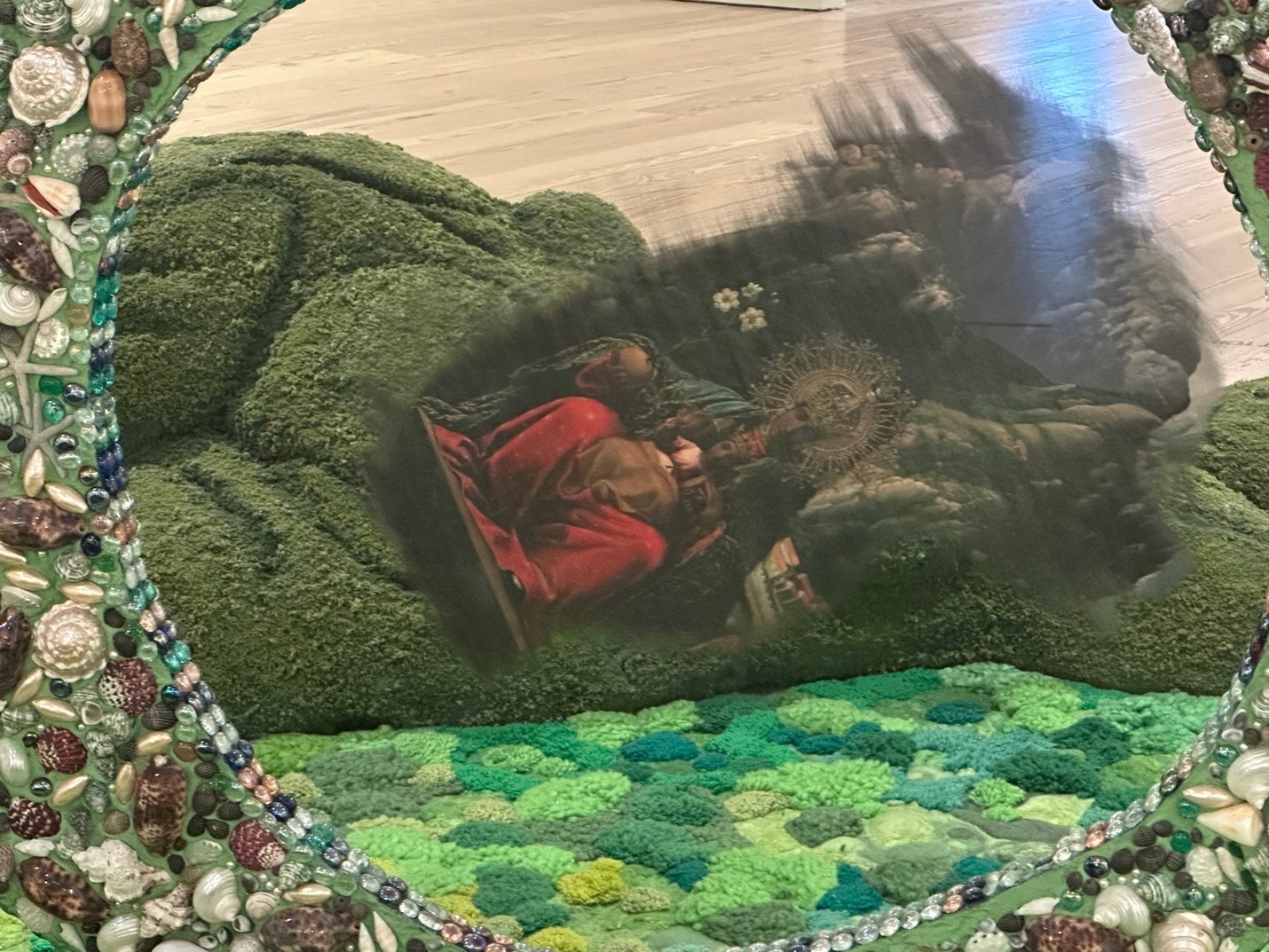
Figure 2. Hevsel: Traces of Encounters (Rozelin Akgün, 2024; mixed-media bioplastic installation with scaffolding, incorporating bioplastics made from sand, corn, cotton residues, and locally collected green vegetables; installation view photograph by Thomas Raggam, 2024).
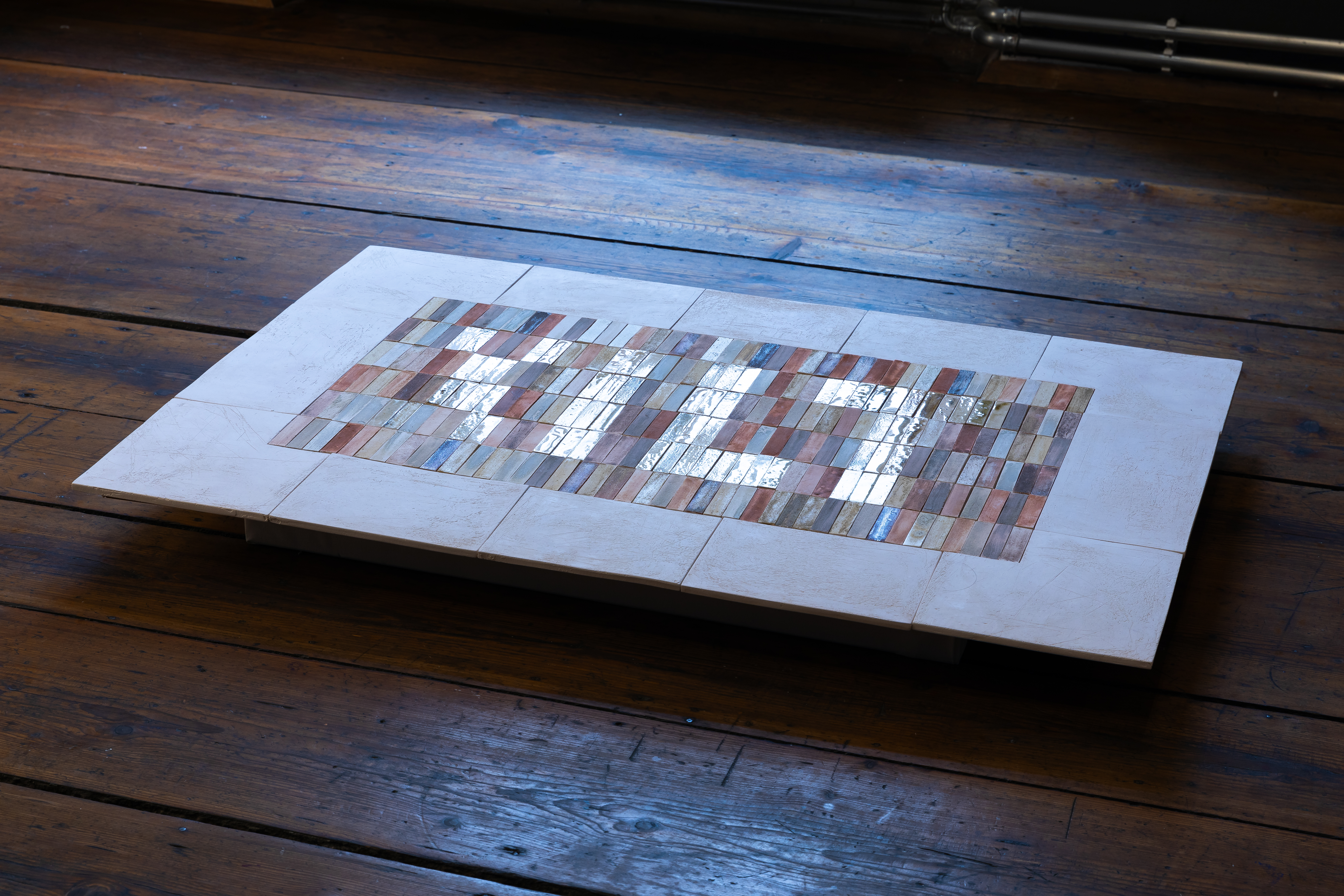
Figure 3. Sediment/Xilt (Barbara Schmid, 2024, ceramic painted with sediments from construction debris, partially glazed and fired in an electric kiln at 1000°C; installation view photograph by Thomas Raggam, 2024).
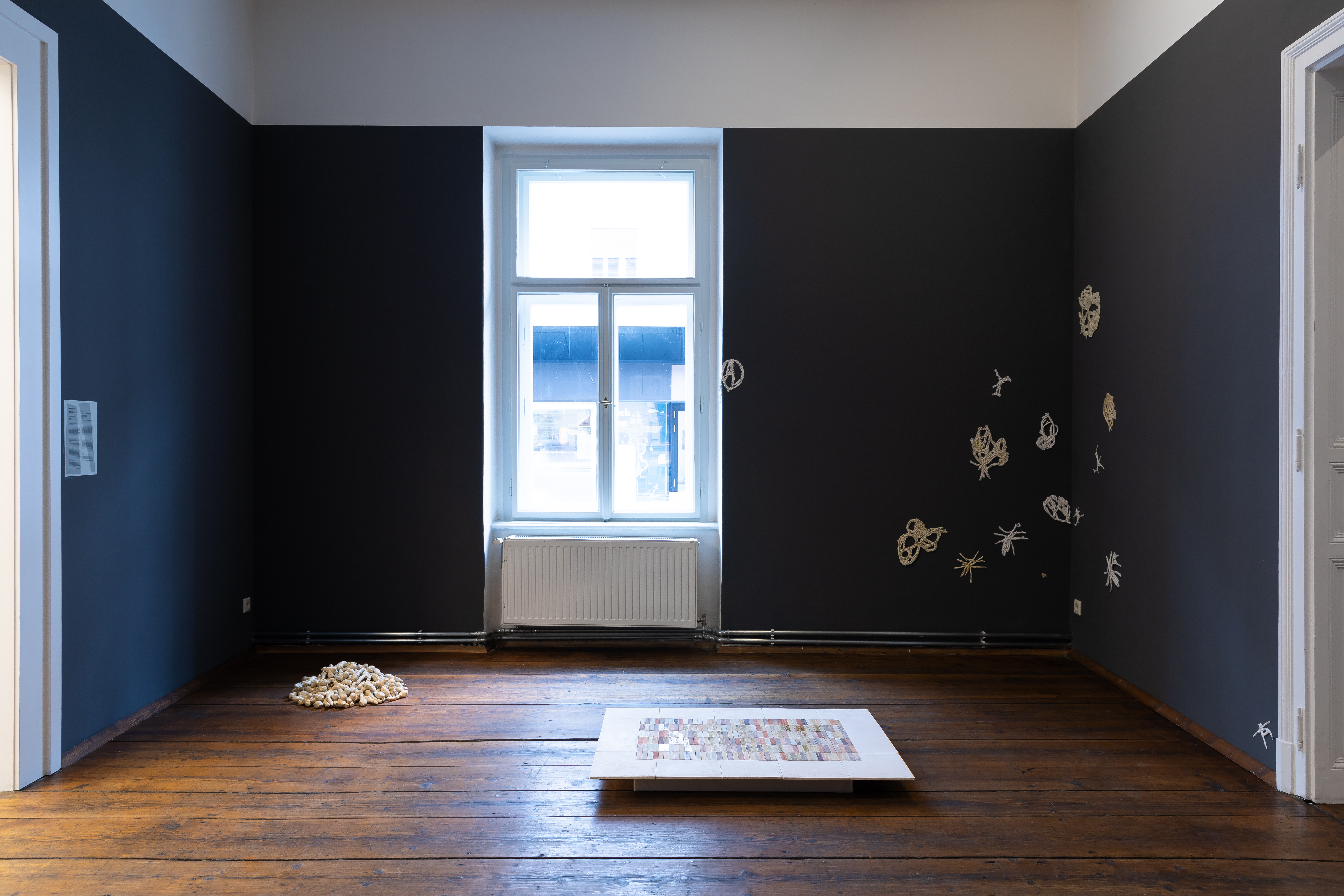
Figure 4. Portulak (Purslane) (Barbara Schmid, 2024, porcelain prints of plants from various locations, glazed with plant ash using porcelain and ash glaze techniques; installation view photograph by Thomas Raggam, 2024).
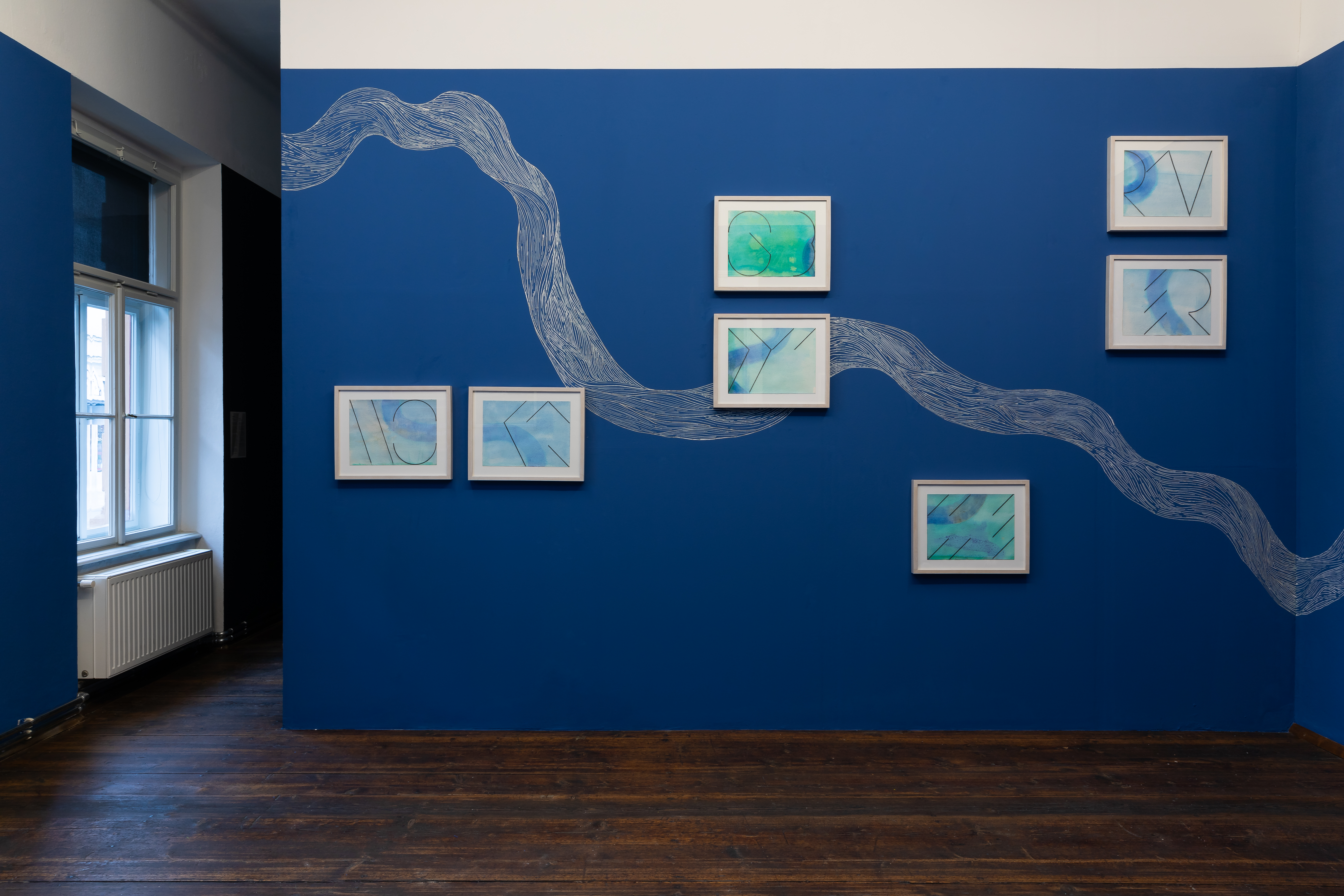
Figure 5. Walking by the River (Hristina Ivanoska, 2024, wall engraving, watercolor works, and photographs; installation view photograph by Thomas Raggam, 2024).
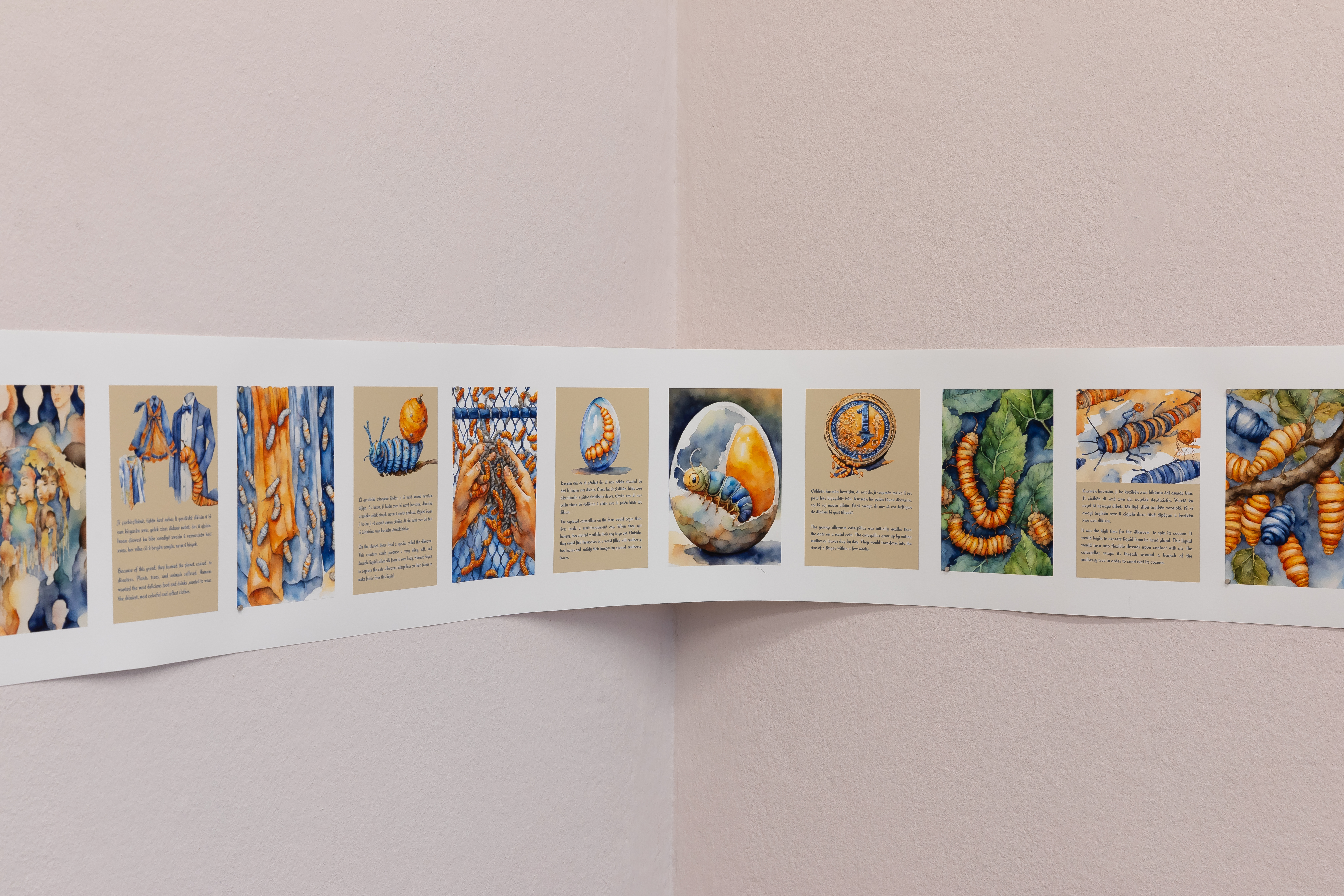
Figure 6. Silkworm and Human (Leyla Keskin, 2021, fanzin and single-channel video still printouts; installation view photograph by Thomas Raggam, 2024).
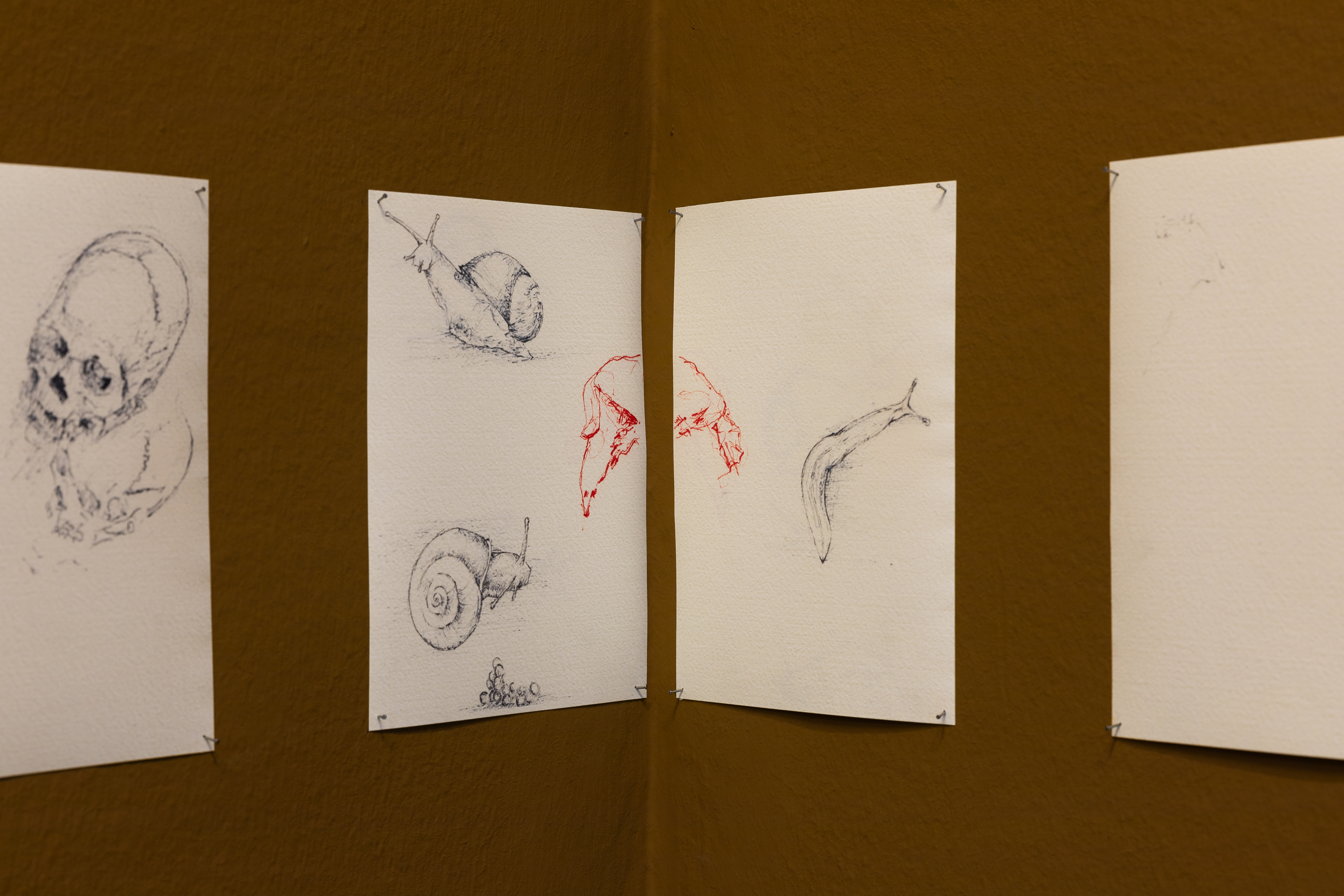
Figure 7. The artist’s drawings featured in her film A Turtle in Ten Seconds (Rojda Tuğrul, 2019; installation view photograph by Thomas Raggam, 2024).
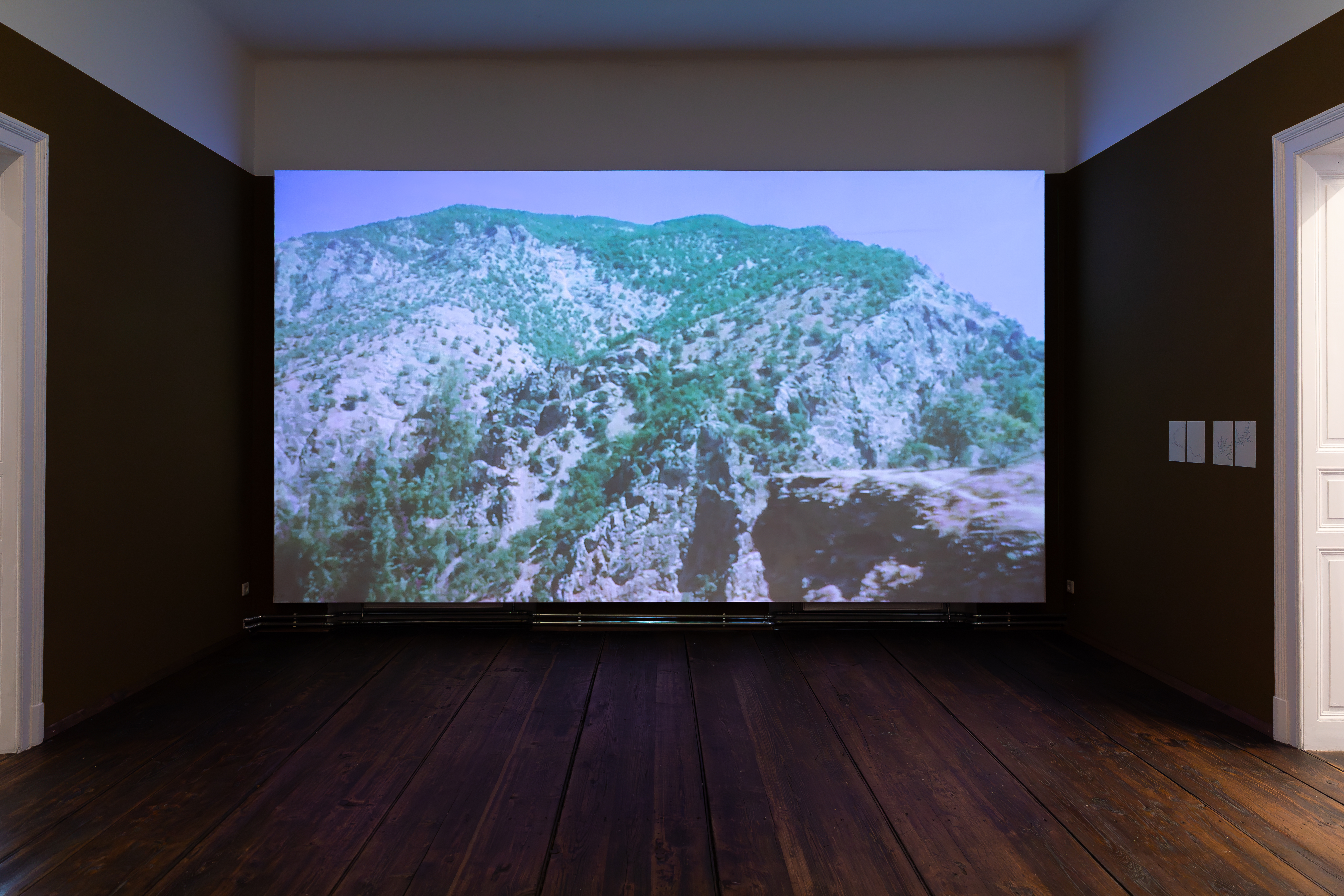
Figure 8. Dersim / Munzur (Rojda Tuğrul, 2018, single-channel video; installation view photograph by Thomas Raggam, 2024).
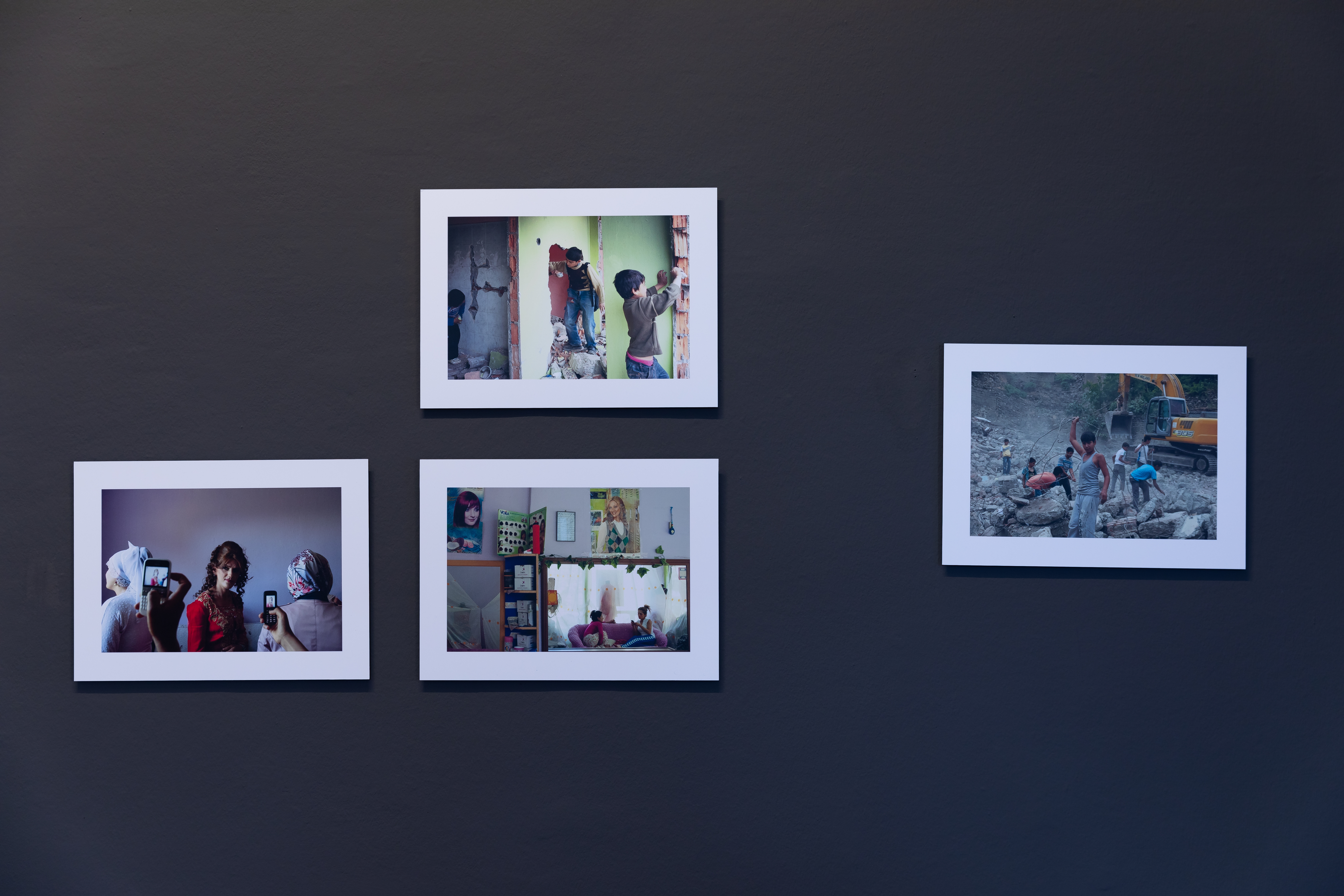
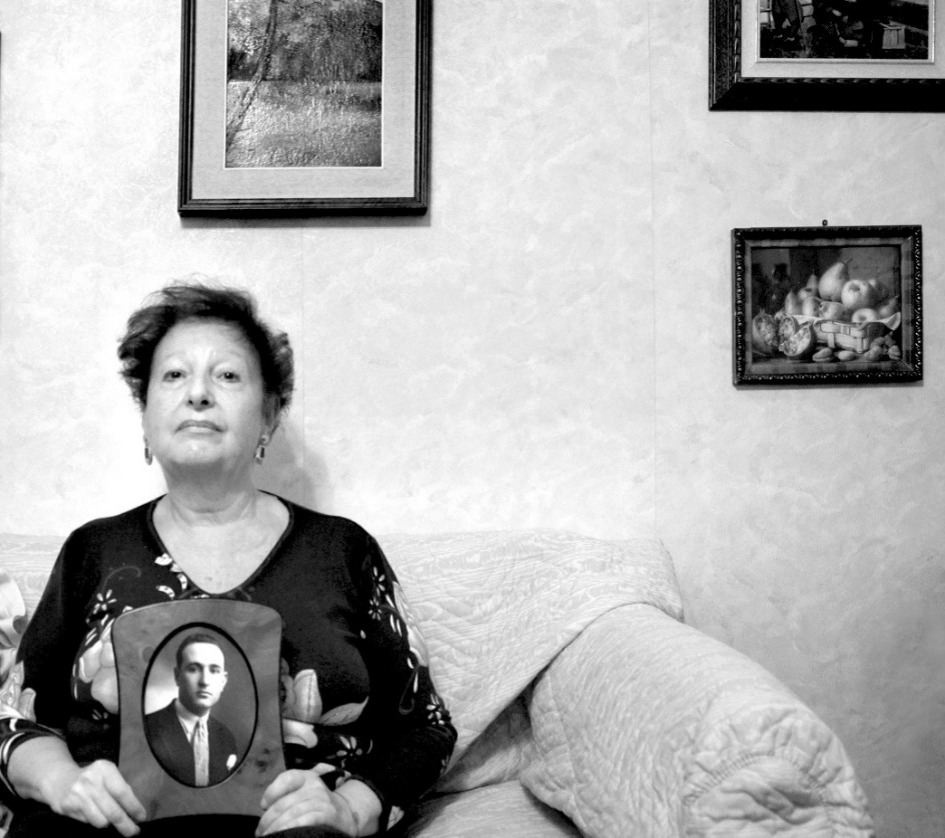
Figure 9. Saraykapı (Aylin Kızıl, 2009, photo series; installation view photograph by Thomas Raggam, 2024).
DB: The question of value is embedded in the exhibition’s title: Sediment/Xilt. Within dominant extractivist frameworks, “sediment” often suggests residue, leftover matter, or something functionally exhausted. The Kurdish term xilt does not necessarily carry this diminished connotation. Alongside related words such as pegir, tort, and durdî, it refers to what settles after a process of labour; what remains from making, fermenting, pressing, and cultivating. In many regional and agrarian contexts, sediment is not waste but accumulation—not depletion but the material trace of effort and transformation.
The exhibition engages the question of value by foregrounding this divergence. It does not simply reclassify what is deemed negligible as newly valuable; rather, it questions the regime that names it insignificant in the first place. Extractivism assigns value to what can be isolated, measured, extracted from its context, and converted into surplus. What cannot be separated, monetized, or rendered productive within this logic is dismissed as excess.
By contrast, the works in the exhibition approach sediment as accumulated time, layered human and non-human labour that condenses through agricultural cycles, fermentation processes, geological compression, and social struggle. Here, residue is not an inert remainder but a dense convergence of processes. It resists immediacy, purification, and profitability because it cannot be fully detached from the relations that produced it.
In this sense, the exhibition proposes another way of valuing life and environments beyond extractivism. Value emerges not from ownership, extraction, or market exchange, but from persistence, entanglement, memory, and care. Sediment is not elevated into purity; it remains mixed, layered, and contingent. These characteristics allow sediment to hold traces of labour and time even when named as waste—to sustain life.
EÇ: There is another thread that, to my mind, figures prominently in the exhibition and that is preservation/protection. Critical debates on the politics of ecology over the past few decades have shown that environmental conservation and protection are not categorically antithetical to the extractivism of largescale dams, mining, drilling for oil, monocultural plantations, and so on. Indeed, conservation and protection practices can very much serve to reproduce or even deepen extractivism. In Earthmoving, I suggest that the northern Kurdistan of our time could be considered a microcosm of a world where extractivism has increasingly come to operate not despite environmentalist and humanitarian sensibilities but rather by mobilizing them in its own way—through its own aesthetically charged projects of purported repair, reconstruction, and representation. In this context, practices proclaiming to protect or conserve species, humans or nature at large are given a new role.
The works featured in Sediment/Xilt respond critically to the roles of preservation and protection. Rozelin Akgün’s work on centuries-old Hevsel Gardens indicates how, since being listed as a UNESCO World Heritage site in 2015, it has further deteriorated let alone regaining its historically crucial role as Amed’s epicentre of food production and communal recreation (figure 10). Barbara Schmid preserves the memory of buildings by turning them into skilfully crafted objects (figure 11). Hristina Ivanoska’s work centres acts of naming (“Naming the Bridge”) and documenting (“Document Missing”) as if to repurpose these two well-known status protection practices for problematizing River Vardar’s reduction to a bordering instrument (figure 12). In both her work and Leyla Keskin’s, groups that patriarchy would like to see only as objects of protection–women in Ivanoska’s case and children in Keskin’s–are treated as social and political actors in their own right: women resist men in times of liberal reform and revolution, and children are incorporated as artistic collaborators or as art’s main target audience (figure 13). The Ilısu Dam, which Keskin’s work features, also has a problematic relationship with conservation. Following years of anti-dam activism that emphasized the risk that damming posed to heritage in the centuries-old town of Heskîf, the state responded by arguing that a thorough plan was in place for preserving the town’s architectural heritage by relocating it to the new settlement to be constructed on a hilltop opposite. But once this relocation was executed, it turned out that what the state meant here was a specific kind of heritage, one that is exclusively Islamic and that involves buildings. Thus excluded from the town’s relocation-worthy heritage were the caves within which Assyrian-Syriac chapels have existed for centuries. Keskin’s work raises questions about conservation and protection also through narratives of extinction that surround the fish species. A similar point can be made about Rojda Tuğrul’s work featuring the Euphrates softshell turtle, an endangered species due to dam building. Narratives about this species have recently found their way into state-affiliated media coverage as well. A news piece from July 2022 published by the state’s news agency for example featured a villager saving a Euphrates softshell turtle that had been brought to the brink of death in one of the tributaries of the Tigris River due to the tributary having dried up. The news piece mentioned “drought” as the reason the turtle almost died, without explaining why this drought might have happened in the first place. Rojda Tuğrul’s other work in the exhibition features a national park in Dêrsim that becomes a tool for counterinsurgency, reiterating that conservation is part and parcel of the problem of colonial and racial capitalist landscapes, not their categorical antithesis. What was once a multifacetedly inhabited and utilized landscape becomes eradicated here through conservation as a national park. In Aylin Kızıl’s work, the urban poor are displaced in the name of cultural heritage preservation in 2009 and then disaster preparedness in 2016 (figure 14). Such treatment implies that this community’s culture is not preservation-worthy and that their lives do not merit protection against disaster risk, only the physical environment does.
What new understandings of and/or approaches to conservation and protection emerge from the exhibition that are fundamentally different from extractivist conservationism and protectionism?
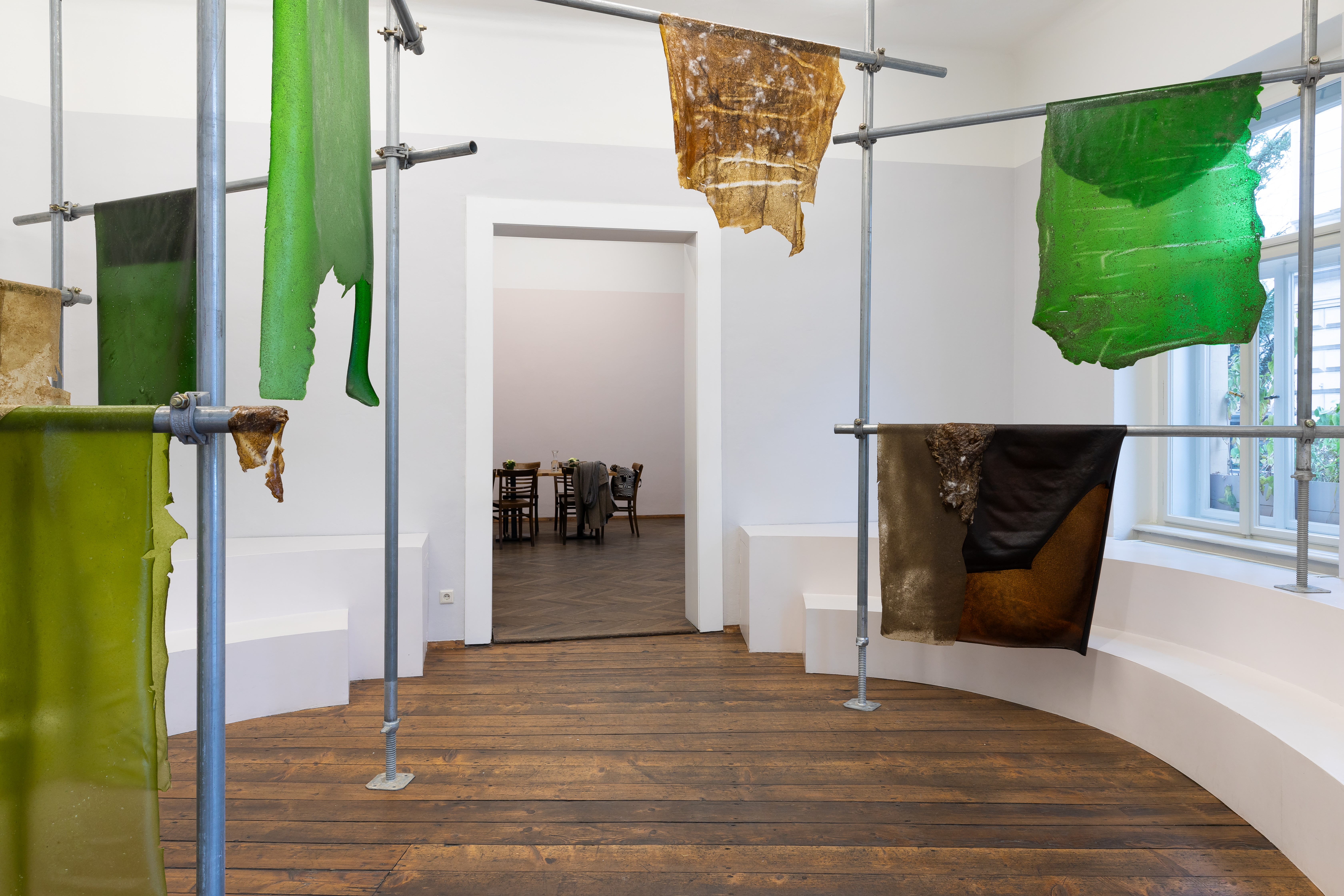
Figure 10. Hevsel: Traces of Encounters (Rozelin Akgün, 2024; mixed-media bioplastic installation with scaffolding, incorporating bioplastics made from sand, corn, cotton residues, and locally collected green vegetables; installation view photograph by Thomas Raggam, 2024).
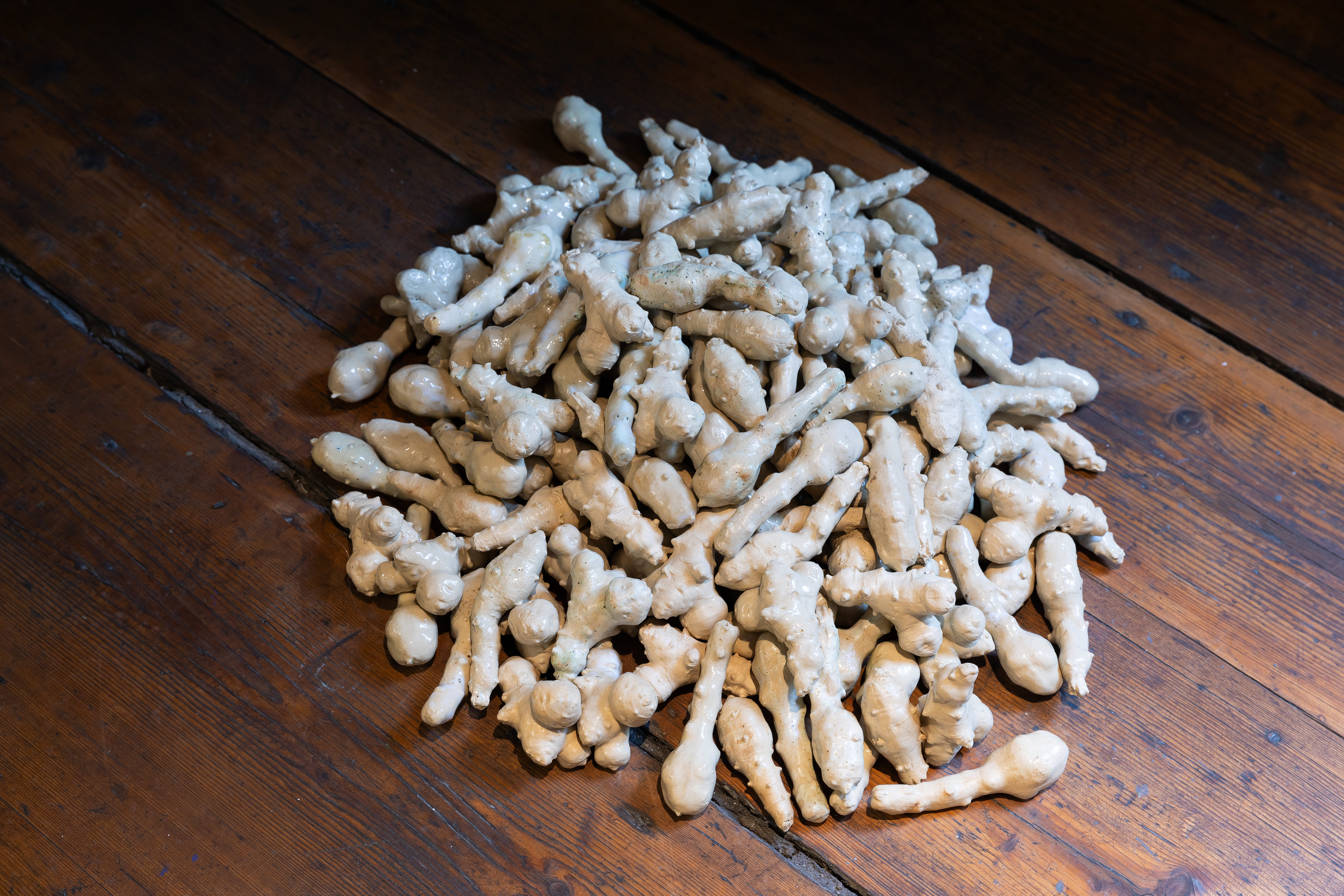
Figure 11. Wurzelwerk / Root System (Barbara Schmid, 2024, ceramic plant roots glazed with plant ash and binding pollutants absorbed from the soil, and fired in an electric kiln at 1200°C; installation view photograph by Thomas Raggam, 2024).
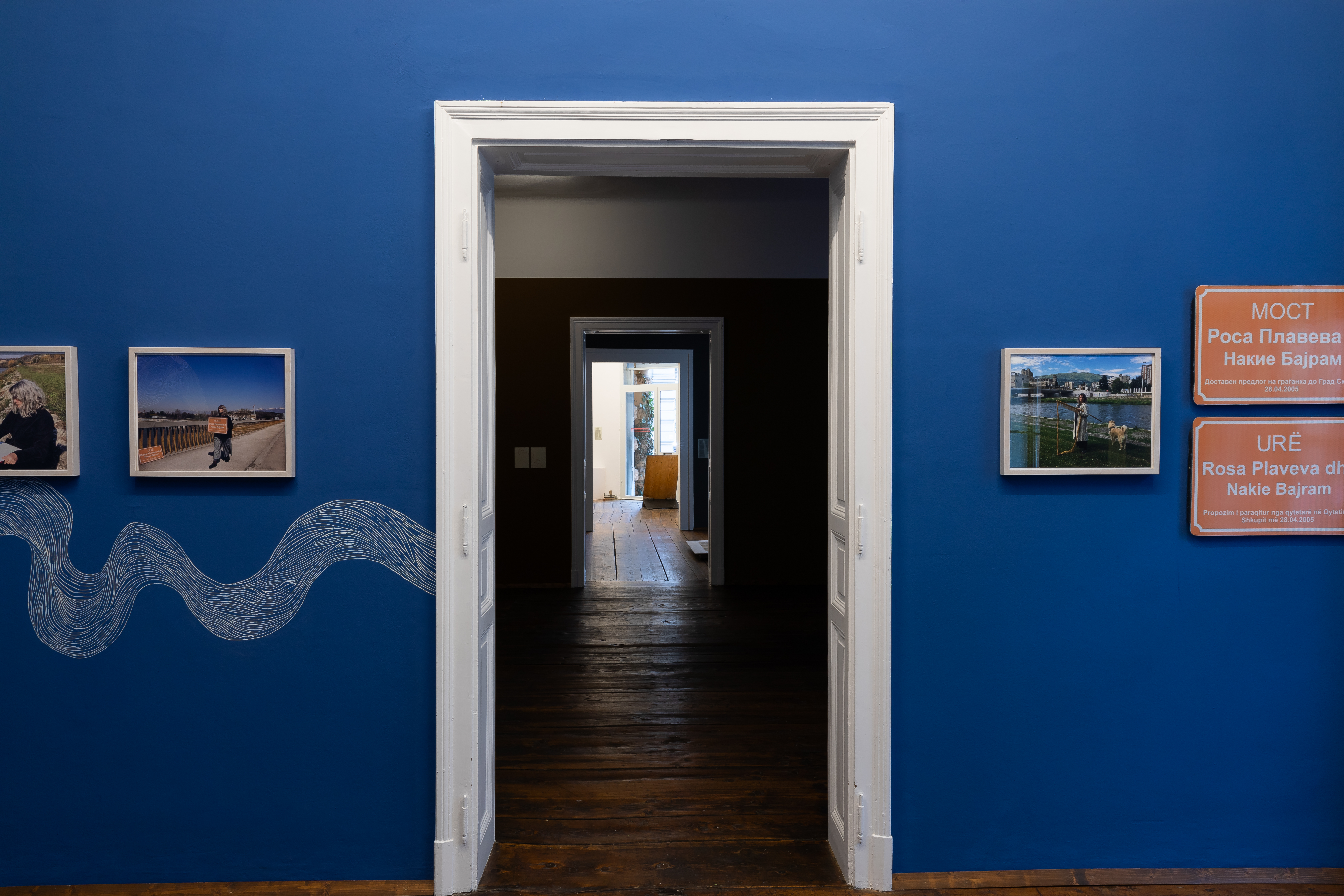
Figure 12. Walking by the River (Hristina Ivanoska, 2024; wall engraving, watercolor works, and photographs, including two bridge signs produced within the artist’s projects Naming the Bridge: Rosa Plaveva and Nakie Bajram; installation view photograph by Thomas Raggam, 2024).
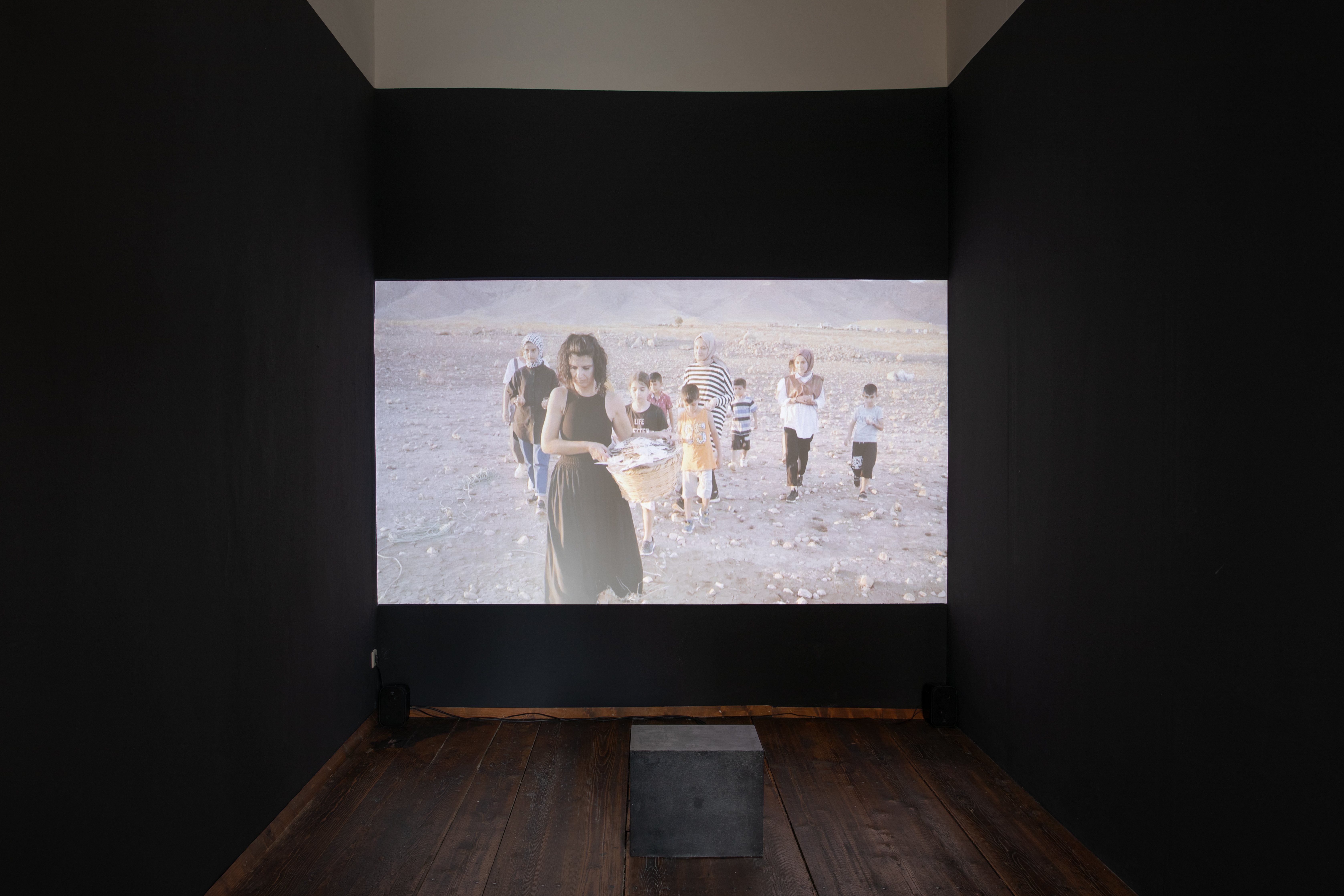
Figure 13. Şîn / Mourning (Leyla Keskin, 2021, single-channel video; installation view photograph by Thomas Raggam, 2024).
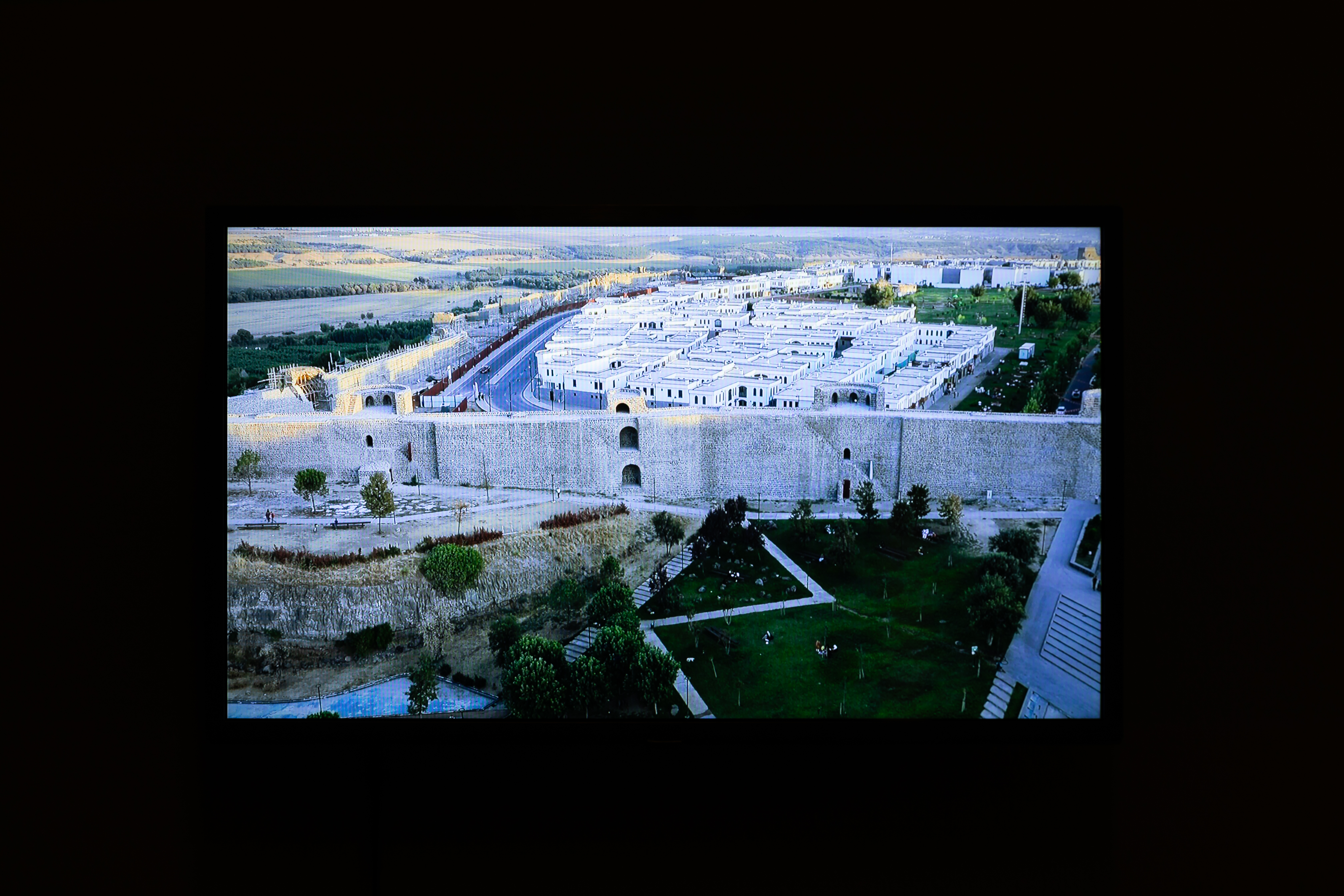
Figure 14. Still from Urban Transformation Project: Saraykapı (Aylin Kızıl, 2024), a slow-motion video composed of two superimposed photographs of the artist’s photo series Saraykapı (2009).
DB: I see how you read the exhibition through the lens of preservation and protection, and I don’t feel the need to counter your framing. It pushes me to ask: what can an exhibition actually propose when it comes to conservation? Is it enough to bring together artists who already hold strong critical positions? Or does the curatorial process itself have to take responsibility for articulating something further?
In my practice, I care as much about how an exhibition comes into being as about what it displays. I don’t treat public programming as an accessory to the main event. For me, it belongs to the same body.
One could say that exhibitions are always already at risk of being conventionally conservationist or protectionist-not least an exhibition like ours that is based on an archive. In this exhibition, we wanted to avoid going down this route. It does not offer a new conservation model. What it attempts instead is a shift in orientation. It resists the idea that preservation means freezing, stabilizing, or isolating something in order to save it. If anything, preservation unfolds through encounters. This became especially visible in the meeting between Rozelin Akgün and Barbara Schmid. Their collaboration did not begin in the exhibition space but during Barbara’s research visit to Diyarbakır, which I initiated during my residency in Graz. Together with Rozelin and local ecological activists, we walked through the Hevsel Gardens and spoke about soil degradation, industrial agriculture, and the political forces reshaping the landscape. What started as research became a sustained exchange. That exchange continued in Graz in the form of a workshop called “Connecting with Roots,” where participants reflected on rooting not simply as a botanical metaphor but as a way of thinking about attachment, responsibility, and belonging (figure 15). Instead of relocating monuments or protecting fragments on a hilltop, we created situations in which people could confront the political conditions of land, heritage, and ecology together. Conservation, in this sense, was not a top-down act of safeguarding; it involved staying with what is already entangled.
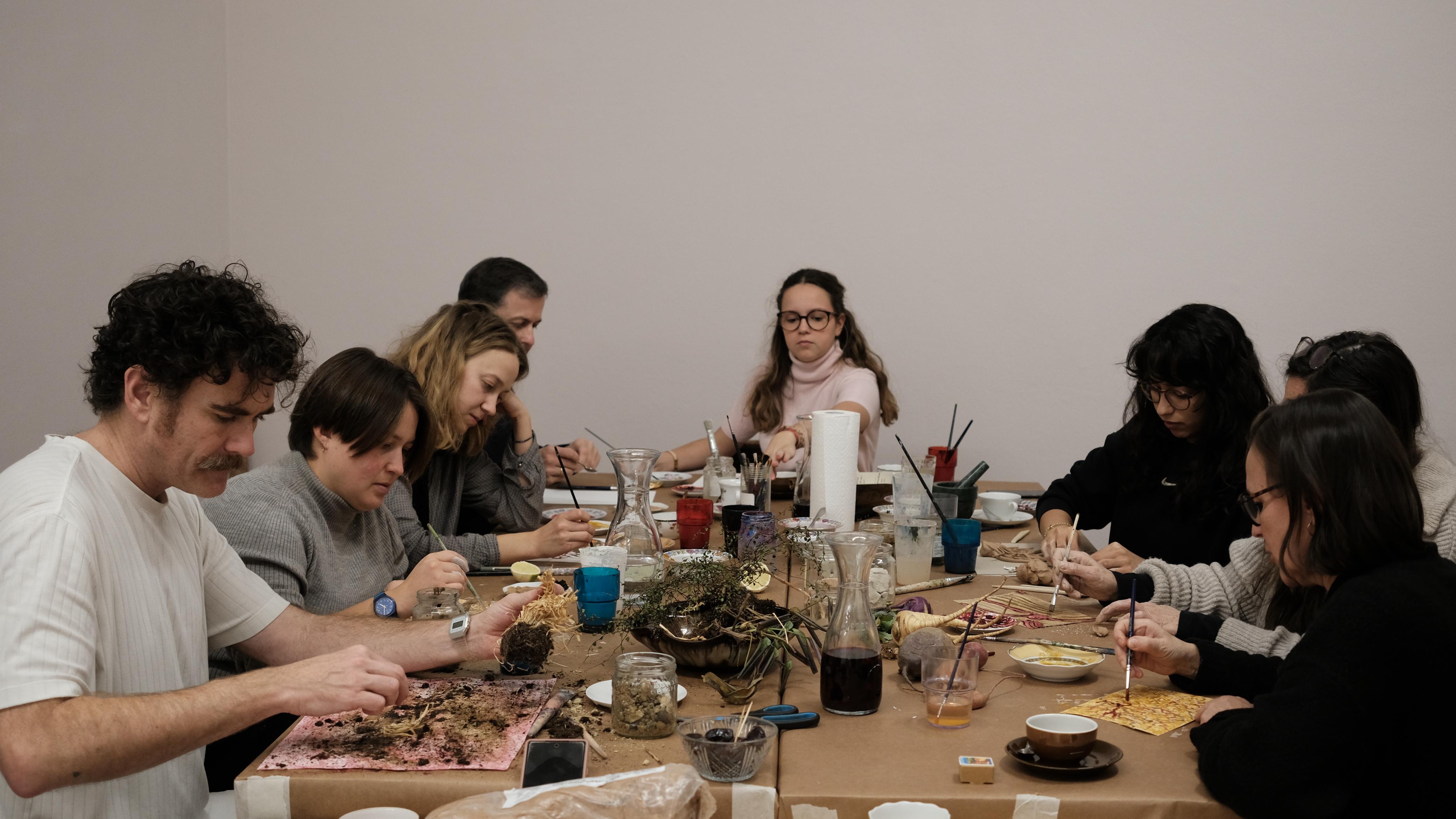
Figure 15. “Connecting with Roots” workshop led by Rozelin Akgün and Barbara Schmid, < rotor > Center for Contemporary Art, 2024.
This orientation also shaped the public program. Conversations, screenings, workshops, and audio recordings were not parallel activities, they were extensions of the exhibition’s thinking (figure 16). An exhibition leaves behind objects, but it also leaves behind encounters. Plus, I’m not always comfortable with leaving the meaning of a work entirely to silent individual contemplation. Public programs facilitate further encounters. One important example was the podcast series Sediment: The Echo of Coexistence, developed in collaboration with İpek Yüksek from Radio Helsinki in Graz. The series emerged from relationships I had built during an earlier residency in the city, particularly with migrant communities and cultural workers engaged in questions of rights and representation. For the podcast series, I invited Graz-based cultural practitioners to engage in dialogue with the exhibition’s artists. These were not unilateral interviews. They were exchanges where both sides asked questions, shared positions, and reflected on each other’s practices. Each episode brought together different forms of situated knowledge, moving between ecological, political, and artistic concerns. The recordings became part of an expanding audio archive.
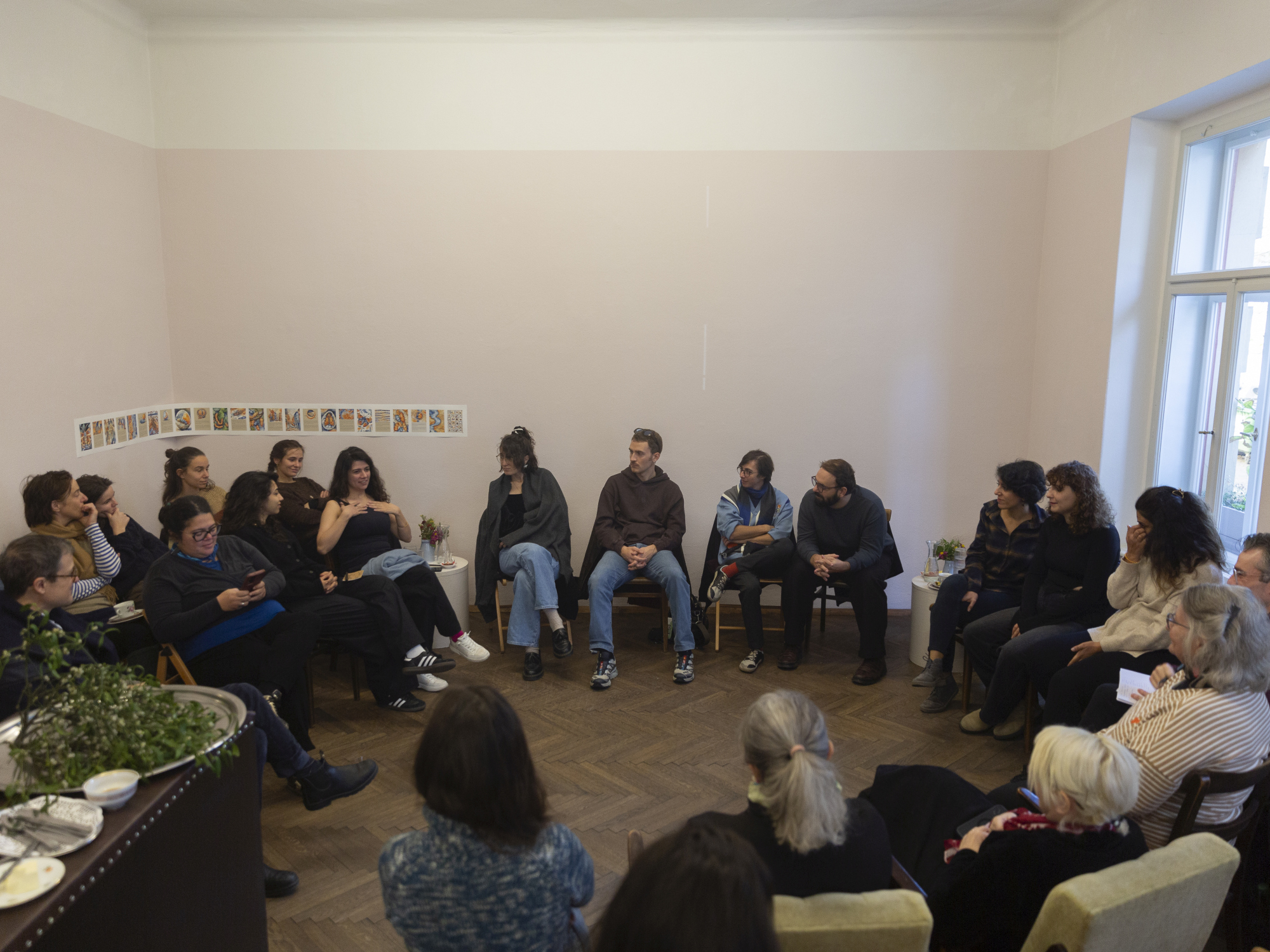
Figure 16. “Sediment Talks” with Rozelin Akgün, Dicle Beştaş, Eray Çaylı, Hristina Ivanoska, Leyla Keskin, Aylin Kızıl, Barbara Schmid, Başak Şenova, and Rojda Tuğrul, < rotor > Center for Contemporary Art, 2024.
The relations unfolding around the exhibition were therefore not limited to preserving objects or documenting finished works. They were sustained relations involving voices that kept circulating and knowledges that evolved and moved across contexts. The exhibition facilitates encounters between various publics—through sound, conversation, and shared reflection as well as visuality. Some of the most meaningful moments occur through these encounters. During my residency in Graz, Turkish- and Kurdish-speaking communities became central participants in these discussions. I remember debating the Kurdish etymology of “sediment” with my favourite döner shop owner. I remember someone with little interest in contemporary art attending the screening of the Amedspor documentary (about the football team from Amed) and then giving us what felt like a full lecture afterward about Kurdish politics. These encounters were not charming trivia. They were moments that moved shared political memory across contexts. They preserved something no institutional conservation framework could account for.
The exhibition publication extended this logic further. It was not conceived as a catalogue documenting a completed exhibition. Başak Şenova and I co-edited this book, contributing our own texts alongside detailed notes on the spatial installation and the project’s formation. We wanted to make the curatorial process visible, not as backstage documentation, but as part of the exhibition’s unfolding. Most importantly, we conducted in-depth conversations with each participating artist. We asked both shared and individual questions about their positions, questions that moved between the professional and the personal, because in this context the personal is inseparable from the political. Their responses did more than clarify the works; they reshaped how we approached the installation itself. The dialogues exposed layers of doubt, intention, and situated knowledge. In that sense, editing became a continuation of the curatorial process rather than a post-exhibition task.
The book, published in January 2026 thanks largely to Başak’s persistence and care, carries not only the exhibition but also the negotiations, hesitations, and shared thinking that went into it. This publication records the tensions that underpinned the exhibition rather than fixing it in place.
In short, Sediment/Xilt raises more questions than answers about conservation. We did not attempt to save landscapes or communities. We tried to question who gets to define what is worth saving, and under what conditions. We practiced attention from within, a slower form of engagement that works through shared inquiry, friction, and solidarity rather than through control. We tried to rework how, by whom, and for whom the story of these landscapes and communities can be told.
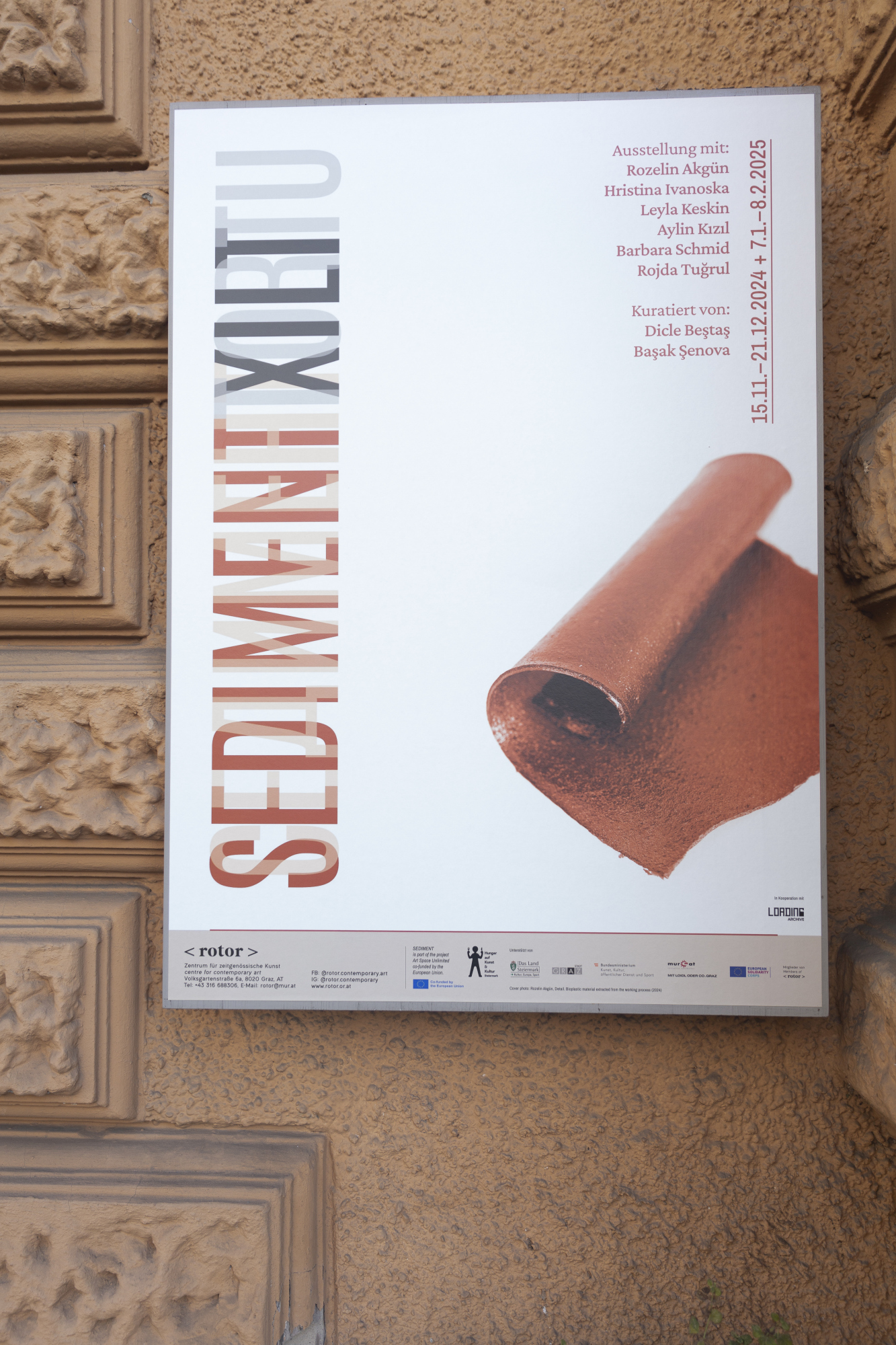
Sediment/Xilt exhibition poster displayed on the entrance wall of < rotor > Center for Contemporary Art (photograph by Thomas Raggam, 2024).
Eray Çaylı and Dicle Beştaş, “On Sediment,” JVC Magazine, 8 April 2026, https://journalofvisualculture.org/on-sediment/.