December 2025
“Here you come again looking better than a body has a right to,” Dolly Parton sings in her country hit from 1977. What does it mean to come again? Parks Sadler is a London-based artist who was born in the American South, and he presents us with a gentle and arousing answer to this question in a body of work entitled Briefs (2023). Sadler’s series renders sensible futural returns as a real means of queering the archive through cemented folds of mnemonic fabric.
Sadler is a multidisciplinary artist whose practice traverses sculpture, photography, printmaking, and videography. His studies of graphic design and photography culminated in his MA in Contemporary Photography; Practices and Philosophies from Central Saint Martins in 2023. Sadler’s work has been exhibited at galleries in London, Paris, Wroclaw, and Charlotte, North Carolina. While he demonstrates a breadth of technical skill through practice-based research, at the heart of each artistic intervention is what he calls the “active archive.”
Countering the connotation of an archive as a site of dispassionate, dense, and seemingly objective data, Sadler attempts to create an archive through the use of personal narratives and intimate materials alike. The aim is to render sensible an archive that feels both private and yet public at once and that becomes possible because, in Laurent Berlant’s words, “intimacy builds worlds; it creates spaces and usurps places.” Sadler often refers to an early project on the work of W.G. Sebald entitled Re-Searching Sebald (2019). Here the affects of memory are presented as a movement, a process or becoming, that takes place generatively between perception and memory traces, between the subjective and the objective. Each image in Re-searching for Sebald signals how images embody or actualize a non-existent that is far from absent or nothing. Instead, Sadler puts tremendous pressure on the indexical guarantee that grounds photographic documentation, not to abandon it altogether but to present a non-existent, which takes place or becomes within and between the pictorial planes of an image. Thus, his images fold the narrative poverty of photography into a mapping of traces that refuses representational or temporal closure. Parks’ work, then, is best understood as a localization, that is, a gesture towards an arena (a spatial condition, a perceptual encounter, a memory) wherein an event takes place: the ontological and temporal becoming of a non-existent subject, an unforeseen return from the past in the open future. Sadler’s intentionally overdeveloped images give us fleeting “shadows of reality,” as Sebald would call them.
Sadler translates these theoretical commitments into new forms in his series Briefs (figure 1). The body of work consists of prints and sculptures that register both the ending and the monumentality of his past romantic relationships. For the project, Sadler reconnected with ex-partners, asking them for a pair of their underwear. Even the gathering of material was an emotional, awkward, funny, cathartic, and frustrating experience, Sadler intimates. With the materials gathered, Parks created soft-ground etchings and sculptures. The prints were made on bedsheets that he subsequently slept on. These prints return us to his notion of an “active archive” as they appear both as x-rays and as spectral tracings (figure 2). The prints, like an archive itself, simultaneously cold, objective, and scientific, but also rife with new active traces, afterimages, and Derridean fever dreams. With the same pairs of underwear, Sadler then created sculptures by coating them in a mixture of white acrylic and resin. The sculptures are both part of the artist’s lived experience as well as aesthetically reminiscent of ancient Greek Phidian-style drapery and neoclassical spolia. A collective cultural history, replete with homosocial desire, subtends a personal, intimate one in ways that suspend each. For this reason, when he exhibits the work, Sadler literally suspends sculptures as if they were floating in air (figure 3).
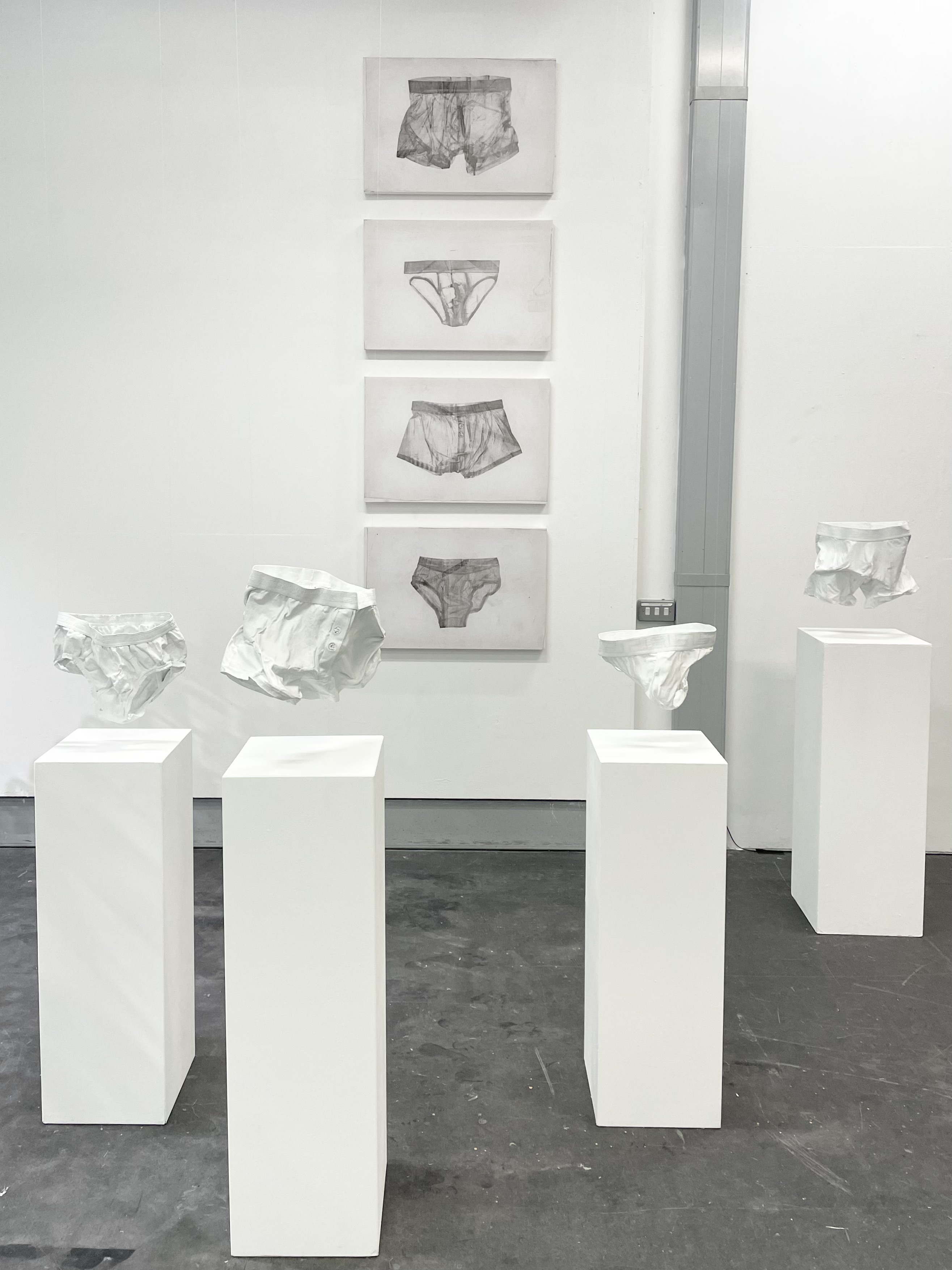
Figure 1. Briefs (2023, Parks Sadler), courtesy of the artist.

Figure 2. Briefs (2023, Parks Sadler), courtesy of the artist.
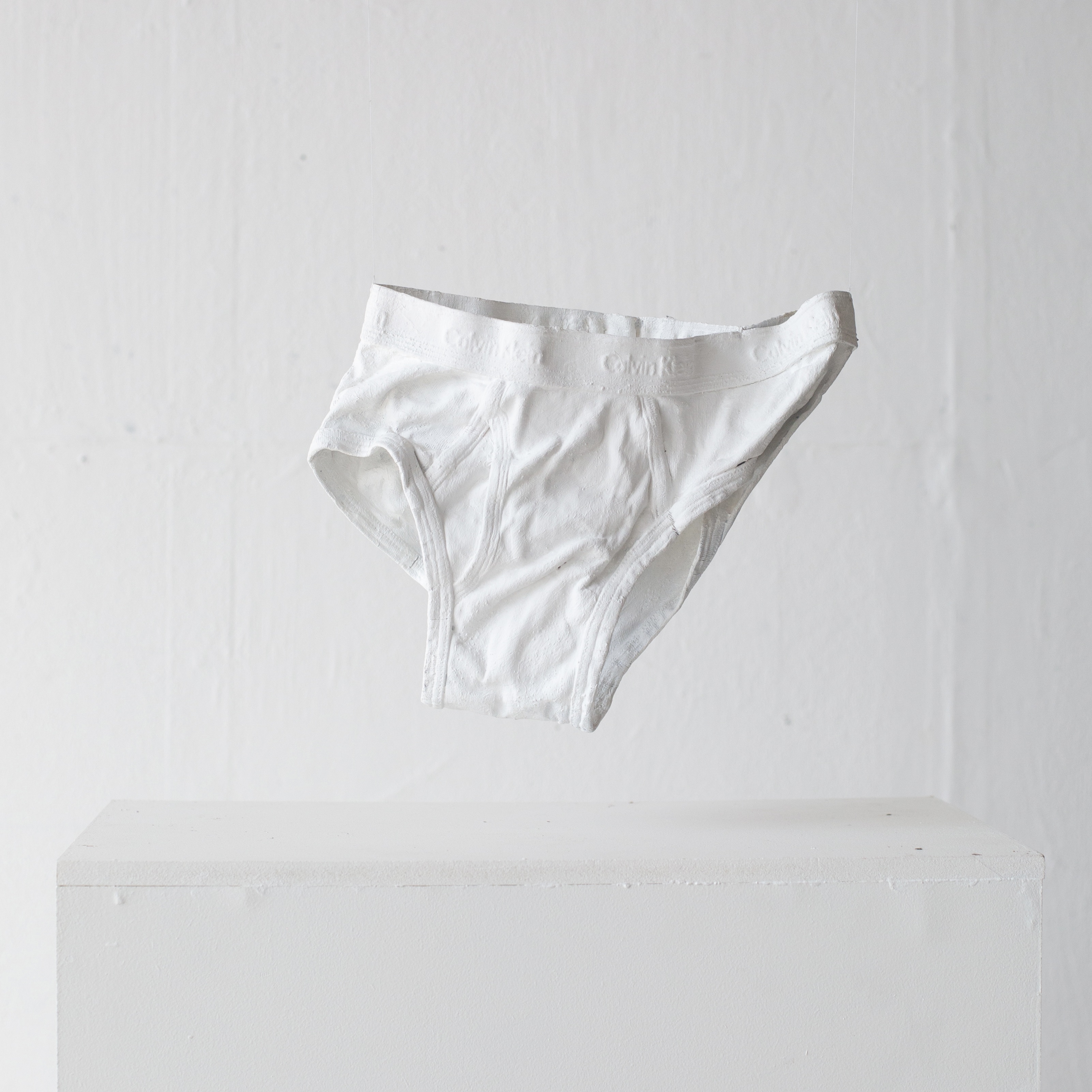
Figure 3. Briefs (2023, Parks Sadler), courtesy of the artist.
What is most curious is the relation between Sadler’s interest in the active archive and the stillness of the sculptures made out of briefs. How does something made so unmoving render a perception of action, of movement? Return, (re)activation, and movement are rendered not in the malleable quality of the briefs (the physicality of their stillness and density), but through their folds. The aesthetic experience Sadler constructs for his viewers is one wherein the perception of texture, damaged surfaces, and rough edges in the sculpture is animated by the sign itself (the pair of underwear). It is the singular pairing—the embodiment or the one within the two that is not a mirroring or doubling—of the physical and the psychological (even moral, perhaps) encounter that Sadler stages that results in a sensation of lightness. In other words, the personal, autobiographical, and intimate content expresses itself as a lightness, a levity that is quite moving for the viewer. The folds not only trace an inside and an outside between the actual and the virtual, but they cast shadows that obscure and tease that everything will not be disclosed. There is no complete reveal or finished archive. There are only moments of lightness embodied within the production of darkness.
Roland Barthes once posited that to hide a passion or a longing for another is untenable: “not because the human subject is too weak, but because passion is in essence made to be seen: the hiding must be seen: I want you to know that I am hiding something from you.”[1] Sadler’s Briefs makes sensible a difficult type of hiding because what one hides in language the body utters. He takes measure to heed the lesson of Barthes’ discourse: “I see the other with a double vision: sometimes as object, sometimes as subject; I hesitate between tyranny and oblation.”[2] Briefs suspends itself in this hesitation. Within it, Sadler forces us to think and to feel how even a brief encounter or relationship engenders a past that carries with it a secret index that is always waiting to materialize in another present, in a future other than its own.
[1] Roland Barthes, A Lover’s Discourse: Fragments, translated by Richard Howard (New York: Farrar, Straus and Giroux, 1977), 42.
[2] Barthes, A Lover’s Discourse, 42.
Briefs (2023, Parks Sadler), courtesy of the artist.
Hannah Grissom is a doctoral student in the Department of Visual Studies at the University of California, Irvine. Her current research on modernism and transdisciplinarity focuses on Hans Bellmer’s illustrations for Georges Bataille’s Story of the Eye (1947).
Hannah Grissom, “Here you come again” JVC Magazine, 4 February 2026, https://journalofvisualculture.org/here-you-come-again/.